“Product of USA” but is it really ? Beef Labels Changed in 2026, What They Really Mean
The new USDA beef labeling rules closed an old loophole. But “Product of USA” is still only one piece of the sourcing puzzle.
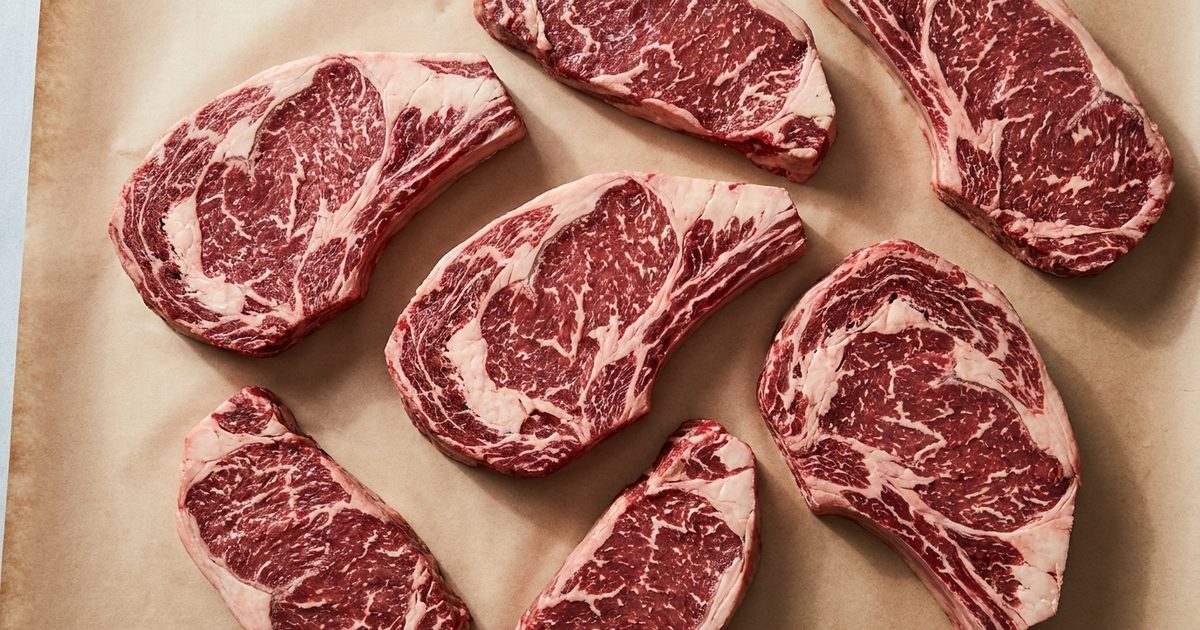
For years, seeing “Product of USA” on a package of beef could create a very specific impression:
This came from American cattle.
That assumption was not always correct.
Under the previous USDA labeling policy, imported beef could undergo certain processing in the United States and, under the old voluntary claim framework, still qualify for a “Product of USA” label.
That changed on January 1, 2026.
The USDA's updated standard now requires beef using the voluntary “Product of USA” or “Made in the USA” claim to come from animals that were born, raised, slaughtered, and processed in the United States.
That is a meaningful change.
But it does not mean all beef sold in America is now domestically sourced.
And it does not mean imported beef is unsafe.
The real benefit is much simpler:
When you see the specific “Product of USA” claim under the new standard, you can have considerably more confidence about where that animal originated.
What Does “Product of USA” Mean on Beef?
As of January 1, 2026, the USDA's updated voluntary labeling standard tightened the requirements for using “Product of USA” and “Made in the USA” on single-ingredient meat products.
For beef to qualify for the claim, the animal must have been:
- Born in the United States
- Raised in the United States
- Slaughtered in the United States
- Processed in the United States
The change removes the previous pathway that allowed imported meat to receive the claim after minimal processing in the United States.
That makes the wording substantially more meaningful than it was under the previous standard.
But there's an important catch
The claim is voluntary.
The USDA did not require every package of beef to carry “Product of USA.”
Instead, it established what producers must meet if they choose to make that specific U.S.-origin claim.
So:
No “Product of USA” claim does not automatically mean imported beef.
It simply means you need additional information to determine the product's origin.
What Was Wrong With the Old Beef Label?
Before the 2026 compliance date, USDA rules allowed a voluntary “Product of USA” claim on certain single-ingredient meat products when the product had been processed in the United States, even if the animal had been raised elsewhere.
In practical terms, that created a disconnect between:
where the animal came from
and
where the final processing occurred.
The USDA's final rule specifically removed the previous policy allowing minimally processed imported products to carry the “Product of USA” claim.
That distinction is important because consumers commonly interpret country-of-origin language as describing the entire product's origin rather than simply its final processing location.
The new standard brings the claim much closer to that expectation.
Is All Beef Sold in the USA From American Cattle?
No.
The 2026 labeling change did not eliminate imported beef.
The United States continues to import beef from eligible foreign suppliers.
Imported meat must come from countries whose inspection systems have been determined by USDA's Food Safety and Inspection Service to provide a level of public-health protection equivalent to the U.S. system.
FSIS maintains lists of eligible foreign establishments and countries authorized to export particular meat products to the United States.
So there are two separate questions consumers should keep apart:
Question 1: Is the beef safe?
Imported beef must meet applicable U.S. import requirements and come through an eligible inspection system.
Question 2: Is the beef American?
That is a country-of-origin question, and the new “Product of USA” standard provides a much stronger answer when that voluntary claim appears.
Safety and origin are not the same thing.
How USDA Checks Imported Beef
Imported beef isn't simply shipped into the country without oversight.
USDA FSIS uses an equivalence system to determine whether a foreign country's meat inspection system provides an equivalent level of public-health protection.
The evaluation can include:
- Government oversight
- Sanitation controls
- Hazard Analysis and Critical Control Point (HACCP) systems
- Chemical residue programs
- Microbiological testing
- Inspection procedures
- Labeling and consumer-protection requirements
FSIS also conducts ongoing verification, including document reviews, audits, and reinspection of imported shipments at the U.S. point of entry.
That means imported does not automatically mean lower safety standards.
A consumer can reasonably want American-raised beef for reasons involving agriculture, traceability, ranching, or personal preference without claiming that foreign beef is inherently unsafe.
Why Does So Much Beef Come From Overseas?
Beef is an international commodity.
Different countries have different climates, pasture availability, land costs, labor costs, cattle systems, and production economics.
This is especially relevant to grass-fed beef.
Countries with extensive pastureland can have structural advantages for raising cattle on forage.
That helps explain why American consumers can encounter grass-fed beef sourced from countries such as Australia, New Zealand, Uruguay, and others.
Imported beef can therefore fill a market niche without necessarily representing a labeling problem.
The problem occurs when the information presented to consumers creates a stronger impression of domestic origin than the underlying sourcing supports.
That is precisely the gap the 2026 rule was designed to address for the specific “Product of USA” claim.
What Does “Packaged in the USA” Mean?
This is where label reading becomes important.
A product can be processed, packaged, or sold in the United States without the animal itself having been born and raised here.
So phrases describing U.S. processing should not automatically be interpreted as proof of U.S. cattle origin.
The USDA's new rule specifically distinguishes the stricter “Product of USA” and “Made in the USA” claims from geographic statements that describe processing or locality.
Think about the wording:
“Product of USA”
→ Under the new voluntary standard, the beef must come from animals born, raised, slaughtered, and processed in the United States.
“Packaged in USA”
→ Describes packaging location, not necessarily where the animal was raised.
“Processed in USA”
→ Describes processing, not necessarily the animal's origin.
The words can look similar on a package.
They do not necessarily answer the same question.
Does “Grass-Fed” Mean American Beef?
No.
This is another common assumption.
Grass-fed describes how cattle are fed, not where they were born.
A package can contain grass-fed beef from a foreign country.
Likewise, American-raised beef isn't automatically grass-fed.
If both feeding method and geographic origin matter to you, you need to evaluate them separately.
For example:
100% grass-fed + Product of USA
communicates two different characteristics:
- Feeding system
- U.S. origin
One claim does not automatically establish the other.
This is especially important for shoppers who deliberately seek grass-fed beef and also want domestic sourcing.
What the 2026 Rule Does Not Tell You
The new “Product of USA” standard answers an origin question.
It does not automatically tell you:
- Whether cattle were grass-fed
- Whether cattle were grain-finished
- Whether antibiotics were used
- Whether hormones were used
- Whether the beef is organic
- Whether the ranch follows regenerative practices
- Whether the cattle were pasture-raised
- Whether the farm is small or large
- Whether the beef has a particular nutritional profile
That's why country of origin should not be treated as a universal quality score.
It is one piece of information.
A useful piece — but still one piece.
Why Country of Origin Matters to Shoppers
People don't necessarily buy domestic beef for one single reason.
For some consumers, origin represents:
- Supporting U.S. ranchers
- Domestic agriculture
- Traceability
- Local or regional sourcing
- Personal purchasing preferences
- Perceived freshness
- Confidence about where an animal was raised
Research into country-of-origin labeling has found that origin information can influence consumers' willingness to pay and perceptions of food products.
But perceptions and objective nutritional quality aren't necessarily the same thing.
A U.S.-raised steak isn't automatically healthier than an imported steak.
The label primarily answers:
Where did this animal come from?
Not:
How healthy is this steak?
The Best Way to Check Beef Origin in 2026
If knowing the animal's origin matters to you, start with the strongest claim available.
1. Look for “Product of USA”
Under the new standard, this is now a meaningful signal of full domestic animal origin and processing.
2. Read the country-of-origin information
Don't assume a U.S. company name means U.S. cattle.
3. Look beyond the front of the package
Check the fine print, producer website, sourcing information, and certification details.
4. Look for farm or ranch traceability
Some producers disclose where cattle are raised and where processing occurs.
5. Separate origin from production method
If you care about both, look for separate evidence for:
U.S. origin + grass-fed + organic + welfare + other attributes.
One label rarely answers everything.
A Simple Beef Label Cheat Sheet
Label or claim
What it tells you
Product of USA
Under the 2026 standard, animal was born, raised, slaughtered, and processed in the U.S.
Made in USA
Subject to the same updated U.S.-origin standard for eligible single-ingredient products
Packaged in USA
Indicates U.S. packaging, not necessarily U.S. cattle
Processed in USA
Indicates U.S. processing, not necessarily animal origin
Grass-fed
Feeding claim, not geographic origin
Organic
Production certification, not automatically U.S. origin
Pasture-raised
Production/welfare characteristic, not automatically U.S. origin
U.S. company/brand
Does not by itself prove U.S. cattle origin
The key is to stop treating labels as one giant quality score.
Each claim answers a different question.
Does Imported Beef Meet U.S. Safety Standards?
Yes — eligible imported beef must come through foreign inspection systems that USDA FSIS has determined to be equivalent to the U.S. system.
FSIS explains that foreign governments do not have to copy the American inspection system word-for-word. Instead, they must demonstrate that their systems achieve an equivalent level of public-health protection.
Imported shipments are also presented to FSIS for reinspection when they enter the United States.
So the 2026 labeling reform should not be interpreted as:
American beef = safe
Imported beef = unsafe
That is not what the rule establishes.
The distinction is primarily about truthful and meaningful origin labeling.
What Changed on January 1, 2026?
Here's the simplest way to remember it.
Before 2026
A product could potentially carry a “Product of USA” claim even when the animal itself was not born and raised in the United States, provided it met the previous processing-based requirements.
From January 1, 2026
The voluntary claim requires the animal to have been:
Born → Raised → Slaughtered → Processed in the USA
That closes the old processing-based pathway for the specific claim.
But remember:
The rule does not require every beef product to use “Product of USA.”
It establishes what producers must meet if they want to make that claim.
The Bottom Line on “Product of USA” Beef
The new 2026 rule makes one important thing clearer.
If you see “Product of USA” on a qualifying single-ingredient beef product under the new standard, the claim now represents a much stronger form of domestic sourcing than it did previously.
The animal must have been:
Born in the United States.
Raised in the United States.
Slaughtered in the United States.
Processed in the United States.
But don't let that turn into another oversimplification.
Imported beef remains legal.
Imported beef must meet applicable U.S. food-safety requirements through USDA's foreign equivalence and import-inspection system.
And “Product of USA” tells you about origin, not whether the beef is grass-fed, organic, regenerative, antibiotic-free, or nutritionally superior.
The smartest approach is to treat every label as a specific question.
Where was the animal raised?
How was it fed?
How was it produced?
Who verified the claim?
Once you start reading beef labels that way, the packaging becomes much easier to understand.
Sources
- USDA FSIS — Voluntary Labeling of FSIS-Regulated Products With U.S.-Origin Claims The primary USDA source explaining the 2026 requirements for “Product of USA” and “Made in the USA” claims.
- USDA FSIS — Voluntary U.S.-Origin Labeling Notice USDA's regulatory notice explaining how the new voluntary origin claims apply to single-ingredient and multi-ingredient products.
- USDA FSIS — Equivalence of Foreign Food-Safety Inspection Systems Explains how USDA determines whether foreign meat inspection systems provide an equivalent level of public-health protection.
- USDA FSIS — Import Guidance Overview of the requirements governing meat, poultry, and egg products imported into the United States.
- USDA FSIS — Importing Meat, Poultry & Egg Products to the United States Consumer-facing explanation of how imported meat is regulated and how FSIS works with foreign inspection authorities.
- USDA FSIS — Eligible Foreign Establishments Database and explanation of foreign establishments certified as eligible to export meat products to the United States.
- USDA FSIS — Import Procedures for Meat, Poultry & Egg Products Detailed background on country eligibility, foreign inspection systems, and U.S. import oversight.
- USDA FSIS — Ongoing Equivalence Verification Details how FSIS continues to evaluate foreign inspection systems through document reviews, audits, and port-of-entry reinspection.