The Hidden Cancer Risk in Deli Meat
What the WHO cancer classification actually means, how much risk deli meat adds, and whether “uncured” meat is really safer.
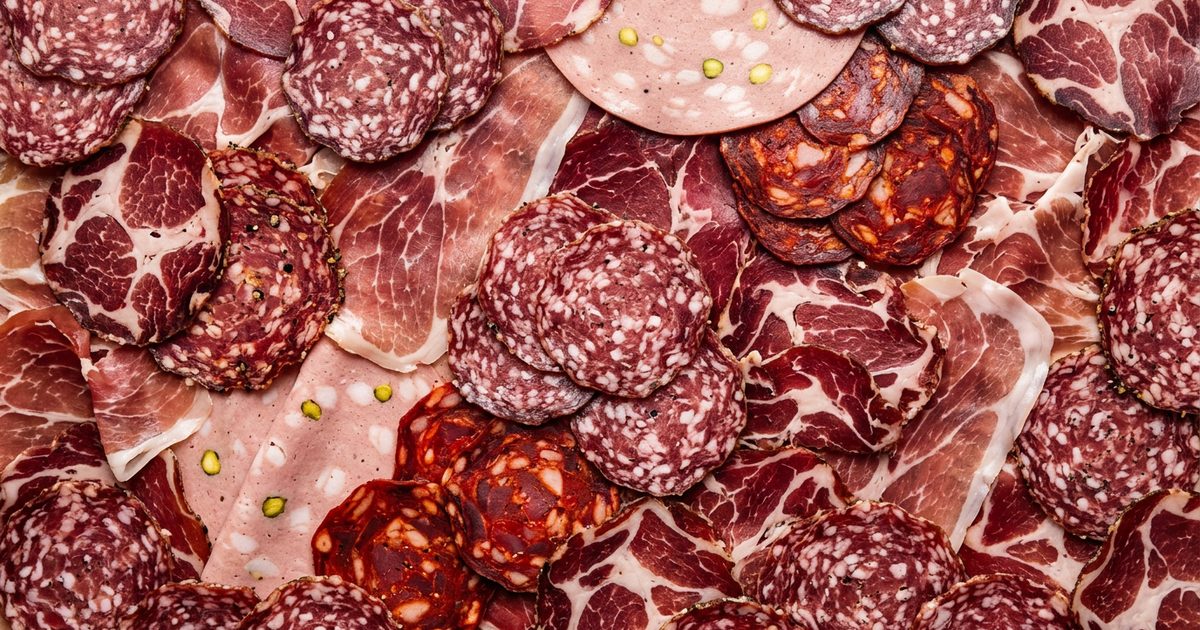
If you eat sandwiches regularly, there is one ingredient worth paying closer attention to:
processed meat.
Deli turkey, ham, salami, roast beef, bacon, sausages, and hot dogs can all fall into the processed-meat category when they have been transformed through curing, salting, fermentation, smoking, or other preservation methods.
The reason this matters is not because one sandwich is dangerous.
It is because the evidence linking regular processed meat consumption to colorectal cancer is unusually consistent.
In 2015, the International Agency for Research on Cancer (IARC), part of the World Health Organization, classified processed meat as a Group 1 carcinogen based on sufficient evidence that consuming it can cause cancer in humans.
That headline can sound alarming.
But there is a critical distinction:
Group 1 describes the strength of evidence that something can cause cancer. It does not mean every Group 1 substance carries the same level of risk.
Smoking, asbestos, and processed meat can all appear in the same evidence category while having dramatically different effects on an individual's overall cancer risk.
The useful question isn't:
“Is deli meat as dangerous as smoking?”
It clearly isn't.
The useful question is:
“How much does regular processed-meat consumption contribute to cancer risk, and what can I do about it?”
Why Is Deli Meat Classified as a Carcinogen?
The WHO's IARC classification followed an extensive review of scientific evidence involving processed meat and cancer.
The working group evaluated more than 800 studies investigating cancer in humans, including epidemiological research from multiple countries.
The strongest association was with colorectal cancer.
Processed meat was classified as Group 1 because the available evidence was considered sufficient to conclude that consumption can cause cancer in humans.
Importantly, the classification is about causal confidence, not danger ranking.
Group 1 means:
There is strong evidence that the exposure can cause cancer.
It does not mean:
The exposure is as dangerous as every other Group 1 carcinogen.
That distinction is essential when interpreting headlines about deli meat.
What Counts as Processed Meat?
Processed meat is broader than deli meat.
The WHO definition includes meat that has been transformed through processes such as:
- Salting
- Curing
- Fermentation
- Smoking
- Other preservation processes
Common examples include:
- Ham
- Salami
- Bacon
- Sausages
- Hot dogs
- Corned beef
- Pastrami
- Some deli turkey products
- Some packaged roast beef products
Not every packaged meat product has the same formulation or processing method.
That's why reading the ingredient list and processing method can provide more information than simply looking at the front of the package.
How Much Does Deli Meat Increase Cancer Risk?
This is where the headline needs context.
The IARC review estimated that each 50-gram portion of processed meat eaten daily was associated with approximately a 17% increase in the relative risk of colorectal cancer.
That's a population-level estimate.
It does not mean that eating one 50-gram serving creates a 17% chance of developing cancer.
It also doesn't mean the risk suddenly appears after eating a sandwich.
Cancer risk accumulates across many factors over long periods.
Relative risk vs absolute risk
Suppose a hypothetical population has a baseline lifetime colorectal cancer risk.
A relative increase applies to that underlying risk; it does not add a fixed percentage point to everyone's probability.
That's why statements such as:
“Deli meat increases your cancer risk by 17%”
need more context.
A better interpretation is:
Regular consumption is associated with a measurable increase in colorectal cancer risk, and the association becomes more important as intake increases.
Does Eating Deli Meat Occasionally Matter?
The evidence does not suggest that you need to panic about an occasional sandwich.
The more relevant pattern is repeated consumption over time.
Think about the difference between:
A few slices of ham once a month
and
A large serving of processed meat every day.
Those are not equivalent exposure patterns.
Cancer epidemiology generally looks for relationships between long-term exposure and disease incidence.
That's why reducing habitual intake is more meaningful than obsessing over an isolated meal.
The practical takeaway
You don't need to treat one sandwich as a toxic event.
But if processed meat is part of your diet every day, reducing frequency is a reasonable evidence-based step.
Why Might Processed Meat Cause Cancer?
Scientists have identified several plausible mechanisms.
There isn't necessarily one single “deli meat chemical” responsible for the entire association.
Instead, several processes may contribute.
N-Nitroso Compounds
Some processed meats contain nitrate or nitrite compounds used during curing and preservation.
Under certain conditions, these compounds can contribute to the formation of N-nitroso compounds (NOCs).
Some NOCs are capable of damaging DNA.
This is one of the major biological mechanisms researchers have investigated when explaining the processed-meat and colorectal-cancer association.
Heme Iron May Also Matter
Red and processed meats contain heme iron, the form of iron found in animal tissue.
Heme can participate in chemical reactions in the digestive tract that promote the formation of potentially harmful compounds.
Research has proposed that these reactions may contribute to damage of the intestinal lining and formation of N-nitroso compounds.
This is one reason the relationship between processed meat and colorectal cancer cannot simply be reduced to one ingredient on the label.
What About Smoking and High-Temperature Cooking?
Some processed meats are smoked, grilled, fried, or otherwise exposed to high temperatures.
High-temperature cooking can generate compounds including:
- Heterocyclic amines (HCAs)
- Polycyclic aromatic hydrocarbons (PAHs)
Both groups contain compounds capable of causing DNA damage under certain conditions.
However, this doesn't mean that eating smoked ham is equivalent to inhaling cigarette smoke.
The dose and route of exposure are completely different.
Again, this is why carcinogen classifications should not be interpreted as a ranking of overall danger.
Is “Uncured” Deli Meat Safer?
This is one of the most confusing labels in the meat aisle.
You may see products marketed as:
“Uncured”
or
“No nitrates or nitrites added.”
That wording can create the impression that the product completely avoids nitrate and nitrite chemistry.
It often doesn't.
Some uncured meats use ingredients such as celery powder or celery juice, which naturally contain nitrates.
During processing, those nitrates can be converted into nitrites.
Those compounds can then participate in the same general curing chemistry.
The important distinction
“Uncured” can describe how the curing ingredients are sourced or labeled.
It does not automatically mean:
“No nitrate or nitrite exposure.”
It also does not establish that the product has a lower cancer risk.
Default Assumption: Don't treat “uncured” as synonymous with “cancer-safe.”
Does “No Nitrates Added” Mean No Nitrates?
Not necessarily.
This is another label-reading trap.
A package may state that no nitrates or nitrites were added directly while still containing naturally nitrate-rich ingredients.
The exact wording and regulatory requirements depend on the product.
Therefore, if your goal is to minimize processed-meat exposure, focusing exclusively on the nitrate claim can distract from the larger issue:
The food is still processed meat.
Reducing overall frequency is a more straightforward strategy than trying to identify the perfect curing ingredient.
What About Nitrate-Free Deli Meat?
Even if a product genuinely avoids added nitrate and nitrite, that doesn't automatically remove every concern associated with processed meat.
Processing can involve several different factors:
- Curing
- Smoking
- Salting
- Heat treatment
- Preservation
- Meat composition
The evidence linking processed meat to colorectal cancer concerns the food category and long-term consumption pattern, rather than one isolated ingredient.
So:
No added nitrates ≠ automatically unprocessed.
Is Deli Turkey Healthier Than Ham?
From a cancer-risk perspective, switching from ham to turkey does not necessarily solve the underlying problem.
A turkey product can still be processed meat if it has undergone the relevant preservation processes.
This is a common grocery-store misconception.
People often associate “turkey” with healthier eating because it can be leaner.
That may matter for calories or saturated fat.
But:
Lean ≠ unprocessed.
If your goal is specifically to reduce processed-meat exposure, replacing processed ham with processed turkey doesn't eliminate the category.
A better swap is something like:
freshly cooked chicken or turkey → sliced for sandwiches
rather than:
processed deli ham → processed deli turkey.
What About Fresh Roast Beef?
This is where processing becomes particularly important.
A piece of fresh beef that you cook at home is not automatically classified as processed meat simply because it is beef.
The WHO/IARC classification distinguishes processed meat from unprocessed red meat.
That doesn't mean unlimited red meat is recommended.
It means the evidence should be interpreted according to the category being studied.
If you want a sandwich protein with less processing, one practical strategy is to cook fresh meat yourself and use the leftovers for sandwiches.
Why Is Colorectal Cancer Becoming More Important in Younger Adults?
Colorectal cancer has traditionally been associated more strongly with older adults.
But rates of early-onset colorectal cancer have increased in several countries.
Researchers are investigating numerous possible explanations, including:
- Dietary patterns
- Obesity
- Physical inactivity
- Alcohol consumption
- Metabolic health
- Environmental exposures
- Gut microbiome changes
It would be premature to blame the increase entirely on deli meat.
Cancer is a complex disease with many interacting risk factors.
The rise in younger adults does, however, make long-term dietary patterns increasingly relevant to public-health research.
What Does the Evidence Actually Prove?
This distinction is important.
Large observational studies can identify associations between dietary exposures and cancer outcomes.
They cannot ethically randomize people to eat processed meat for decades to prove causation experimentally.
Researchers therefore combine:
- Prospective cohort studies
- Case-control studies
- Meta-analyses
- Mechanistic research
- Toxicology
- Dose-response relationships
When multiple evidence streams point in the same direction, confidence in the relationship increases.
That is part of why IARC concluded that the evidence was strong enough to classify processed meat as carcinogenic to humans.
Processed Meat vs Red Meat: Don't Confuse Them
These categories are related but not identical.
Processed meat
Examples:
- Bacon
- Ham
- Salami
- Sausages
- Hot dogs
- Many deli meats
Unprocessed red meat
Examples:
- Fresh beef
- Fresh lamb
- Fresh pork
IARC classified processed meat as Group 1.
It classified red meat as Group 2A, probably carcinogenic to humans.
That difference reflects the strength of evidence, not a claim that red meat is harmless.
What Is the Best Way to Reduce Risk?
You don't necessarily need to eliminate every processed meat product.
A more practical approach is to reduce frequency and quantity.
Instead of:
Deli meat every day
Try:
Freshly cooked chicken, turkey, eggs, tuna, beans, or other minimally processed proteins on most days.
Instead of:
Large servings of processed meat
Try:
Smaller portions less frequently.
Instead of:
Buying the same processed meat every week
Try:
Rotating protein sources.
The goal is to change the overall dietary pattern rather than obsess over one ingredient.
Buyer Checklist: Choosing Deli Meat
If you're going to buy deli meat, look beyond the front-of-package health claims.
What To Check
- How frequently you'll realistically eat it
- Whether the product is classified as processed meat
- Serving size
- Sodium content
- Added nitrate or nitrite ingredients
- Whether “uncured” relies on celery-derived nitrate
- Ingredient transparency
- Independent testing where available
Don't Overweight
- “Natural”
- “Uncured”
- “No nitrates added”
- “Premium”
- “Organic”
These claims can describe particular production attributes without proving a lower cancer risk.
The Best Signal is the overall processing method and how frequently you consume the product.
What About High-Pressure Processing?
High-pressure processing (HPP) is an interesting technology in the deli-meat category.
Instead of relying exclusively on heat or traditional preservation methods, HPP uses extremely high pressure to reduce microbial contamination.
Some manufacturers use HPP to extend shelf life and improve food safety while reducing reliance on certain preservatives.
However, HPP should not automatically be treated as a cancer-prevention technology.
The evidence supporting processed meat and colorectal cancer is broader than simply the presence or absence of nitrites.
Therefore:
HPP may be a useful processing distinction, but it does not make processed meat equivalent to fresh, unprocessed meat.
That distinction is important when evaluating marketing claims.
The Bottom Line: Is Deli Meat Bad for You?
The strongest evidence-based answer is:
Regular consumption of processed meat increases colorectal cancer risk.
That is why the WHO's cancer agency classifies processed meat as a Group 1 carcinogen.
But the classification should not be sensationalized.
Group 1 does not mean processed meat is as dangerous as cigarettes.
The risk associated with processed meat is substantially smaller than the risks associated with major exposures such as smoking.
The practical message is therefore not:
“Never eat deli meat again.”
It's:
Don't make processed meat an everyday staple.
If you eat deli meat occasionally, there's little reason to panic over an individual serving.
If you eat it every day, reducing your intake is a sensible way to lower a known dietary cancer risk.
And if you're choosing between a highly processed deli product and freshly cooked meat, the less-processed option is generally the better default.
Frequency matters.
Dose matters.
The overall diet matters more than one sandwich.
Sources
- World Health Organization — Q&A: Carcinogenicity of Red and Processed Meat Explains the IARC classification, the evidence connecting processed meat with colorectal cancer, and why carcinogen classification does not represent the magnitude of risk. (who.int).
- International Agency for Research on Cancer — IARC Monographs Volume 114 The underlying scientific evaluation of red meat and processed meat carcinogenicity.
- National Cancer Institute — Meat and Cancer Risk Provides an accessible overview of the research examining processed meat, red meat, and cancer.
- American Cancer Society — Colorectal Cancer Statistics Current statistics on colorectal cancer incidence, mortality, and trends.
- World Cancer Research Fund — Meat and Cancer Research Reviews evidence surrounding meat consumption, colorectal cancer, and dietary cancer prevention.
- American Institute for Cancer Research — Colorectal Cancer Prevention Practical dietary and lifestyle guidance based on cancer-prevention research.
- National Cancer Institute — N-Nitroso Compounds Background on N-nitroso compounds, their formation, and their relevance to cancer research.
- U.S. Food Safety and Inspection Service — Cured and Smoked Meat Products Background on curing, nitrites, nitrates, and how these ingredients are used in processed meat products.