Natural vs Synthetic: Which Fabrics Are Better for You?
A science-based guide to cotton, linen, wool, silk, polyester, nylon, acrylic, and other common fabrics.
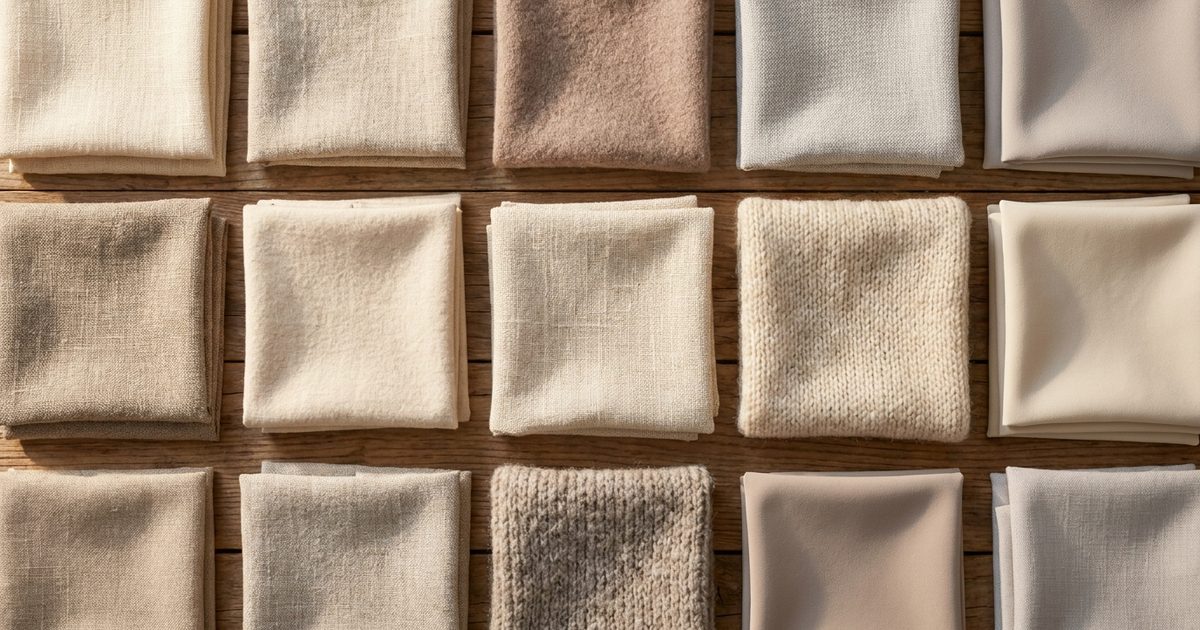
Your clothing touches your skin for hours every day.
That makes fabric choice more than a question of softness, appearance, or price.
The material itself matters, but so do the things added to it during manufacturing.
Dyes, finishing chemicals, coatings, wrinkle-resistant treatments, antimicrobial agents, flame retardants, and synthetic fibers can all change the exposure profile of a garment.
Then there is another issue that has received growing scientific attention:
microfiber shedding.
Synthetic clothing can release tiny fibers during washing and wear. These fibers have been detected in household dust, indoor air, wastewater, and the wider environment.
But there is an important distinction between exposure and proven harm.
Scientists can measure textile chemicals and microfibers in the environment. That does not automatically mean wearing a particular shirt will cause disease.
So instead of asking:
“Which fabric is toxic?”
A better question is:
“Which fabrics minimize unnecessary chemical exposure, synthetic-fiber shedding, and skin irritation?”
Using that framework, some materials consistently look better than others.
Fabric Safety Ranking at a Glance
There is no universally “safest” fabric because the answer depends on what you're trying to minimize.
For general everyday wear, however, a practical ranking is:
Rank
Fabric
Overall Exposure Profile
Main Consideration
1
Linen
Very favorable
Finishing and dyes
2
Organic cotton
Very favorable
Processing and dyes
3
Hemp
Very favorable
Processing quality
4
Silk
Favorable
Dyes and finishing
5
Wool
Favorable
Fiber sensitivity and treatments
6
Modal / Lyocell
Moderate-favorable
Manufacturing chemistry
7
Viscose / Rayon
Moderate
Manufacturing and finishing
8
Nylon
Less favorable
Synthetic fibers and additives
9
Polyester
Less favorable
Microfiber shedding
10
Acrylic
Least favorable
High shedding and synthetic chemistry
This isn't a medical ranking.
It is an exposure-oriented framework based on fiber type, processing, chemical treatments, microfiber release, breathability, and skin compatibility.
And importantly:
The finished garment matters more than the fiber name alone.
A minimally treated polyester shirt and a heavily treated “natural” garment are not necessarily equivalent.
What Makes a Fabric “Safer”?
Before comparing individual fabrics, it's useful to understand the criteria.
1. Chemical Processing
Textiles can be treated with chemicals for:
- Color
- Water resistance
- Wrinkle resistance
- Flame resistance
- Stain resistance
- Antimicrobial properties
- Odor control
- Softness
- Shrink resistance
Some treatments can remain on the finished garment.
That doesn't automatically make the garment dangerous, but unnecessary chemical treatments increase the number of substances a consumer may be exposed to.
2. Microfiber Shedding
Synthetic textiles can release microscopic fibers during washing and everyday use.
Polyester, nylon, and acrylic are particularly relevant because these fibers are plastic-based.
Studies have demonstrated that laundering synthetic clothing can release large numbers of microscopic fibers into wastewater.
Some fibers are captured by wastewater-treatment systems, while others can enter the environment.
The human-health implications of chronic exposure are still being investigated.
Known: synthetic textiles shed fibers.
Still uncertain: exactly how much this contributes to long-term human disease.
That distinction matters.
3. Skin Contact
Clothing creates prolonged contact between fabric and skin.
The most important variables include:
- Fiber diameter
- Friction
- Moisture retention
- Heat retention
- Dyes
- Finishing chemicals
- Individual sensitivity
A fabric that feels comfortable to one person can irritate another.
For people prone to irritation, the simplest strategy is often to choose soft, breathable, minimally treated clothing.
4. Breathability and Moisture
Breathability is not necessarily a toxicity measurement, but it affects comfort and skin conditions.
Fabrics that allow heat and moisture to escape can reduce the damp environment created between skin and clothing.
This can be particularly useful in hot climates or during exercise.
Again, this doesn't mean breathable fabrics are automatically healthier.
It means comfort, moisture management, and skin compatibility are separate factors that belong in the decision.
#1 Linen: One of the Best Everyday Choices
Linen is made from the flax plant and has several characteristics that make it attractive for everyday clothing.
It is:
- Breathable
- Lightweight
- Moisture-absorbing
- Durable
- Naturally derived
- Comfortable in hot weather
The structure of linen fibers allows air to move relatively easily through the fabric.
That makes linen particularly appealing for:
- Shirts
- Bedding
- Summer clothing
- Loose trousers
- Hot and humid climates
The caveat
“Linen” doesn't tell you how the finished garment was dyed or treated.
A heavily dyed or chemically finished linen garment can have a very different exposure profile from a minimally treated one.
Best choice: undyed or lightly dyed, minimally finished linen.
#2 Organic Cotton: The Best All-Rounder
Cotton is one of the easiest fabrics to recommend because it combines availability, comfort, breathability, and relatively simple fiber chemistry.
Organic cotton adds another advantage:
The organic certification system restricts the agricultural chemicals and production methods used during cultivation.
That doesn't mean an organic cotton shirt is chemical-free.
Textile manufacturing can still involve:
- Dyes
- Bleaches
- Finishing agents
- Softening treatments
- Printing chemicals
So the strongest argument for organic cotton is primarily agricultural production, not the idea that the finished garment contains zero chemicals.
Why cotton works well
Cotton is:
- Breathable
- Comfortable
- Widely available
- Easy to wash
- Suitable for sensitive skin
- Available in minimally processed forms
For everyday basics, organic cotton is one of the easiest low-exposure choices to make.
#3 Hemp: Durable and Naturally Derived
Hemp has become increasingly popular in clothing because of its durability and agricultural characteristics.
The plant can be grown with relatively low pesticide input compared with some conventional crops, although farming practices vary by region.
Hemp fibers are also strong and durable.
That durability can be useful because garments that last longer need to be replaced less frequently.
What to watch for
Hemp clothing is often blended with:
- Cotton
- Polyester
- Elastane
A garment marketed as “hemp” may therefore contain considerably less hemp than expected.
What To Check: look at the actual fiber composition rather than the marketing description.
#4 Silk: Excellent for Low-Friction Clothing
Silk is a natural protein fiber known for its smooth surface.
That makes it particularly interesting for clothing worn directly against the skin.
Potential advantages include:
- Low friction
- Smooth texture
- Good temperature regulation
- Lightweight construction
For people who dislike rough fabrics, silk can be exceptionally comfortable.
The drawback
Silk production and garment finishing can involve dyes, bleaching, and other treatments.
And silk is much less durable than some alternatives.
If chemical exposure is your primary concern, look for transparent manufacturing information rather than assuming every silk garment is equally low exposure.
#5 Wool: Natural but Not Ideal for Everyone
Wool is another natural fiber with excellent temperature regulation.
It can absorb moisture vapor while still retaining insulating properties.
Wool can also resist odors better than some synthetic fabrics, potentially reducing the need for frequent washing.
But there is an obvious downside:
Some people find wool irritating.
That can depend on:
- Fiber diameter
- Fabric construction
- Individual skin sensitivity
- Lanolin sensitivity
- Finishing treatments
Merino wool is often softer because its fibers are finer than traditional coarse wool.
Wool's biggest caveat
Some wool garments receive treatments designed to prevent shrinking or improve durability.
Those treatments may be useful, but they make the finished product different from untreated wool.
#6 Modal and Lyocell: Soft, But More Chemically Processed
Modal and lyocell belong to a category often called regenerated cellulose fibers.
They begin with plant-derived cellulose but are transformed through industrial chemical processing.
This creates an important distinction:
Plant-derived does not mean minimally processed.
Lyocell is generally manufactured using a solvent-based process designed to recover and reuse the solvent.
Modal uses a different process.
From a consumer perspective, these fabrics can offer:
- Excellent softness
- Breathability
- Moisture management
- Good drape
- Comfortable skin contact
They may therefore perform well from a comfort perspective even though their manufacturing is more chemically intensive than simply wearing an untreated natural fiber.
#7 Viscose and Rayon: Natural Source, Synthetic Process
Viscose and rayon are also produced from cellulose.
The raw material may come from wood pulp or another cellulose source.
But the plant material undergoes substantial chemical processing before becoming textile fiber.
This is where the “natural fabric” label can become misleading.
A garment can originate from a tree while undergoing a manufacturing process that is far more chemically intensive than conventional cotton or linen.
What matters
For consumers, residual chemical exposure from a finished garment is not necessarily equivalent to occupational exposure experienced during manufacturing.
Workers involved in viscose production can face substantially different exposure levels than consumers wearing a finished shirt.
That distinction is important.
Occupational hazard ≠ consumer exposure.
#8 Nylon: Durable but Synthetic
Nylon is a petroleum-derived synthetic polymer.
Its major advantages are:
- High strength
- Abrasion resistance
- Lightweight construction
- Stretch potential
- Durability
These properties make it useful for:
- Sportswear
- Swimwear
- Outdoor clothing
- Hosiery
But nylon is still a synthetic plastic fiber.
It can release microfibers during washing and use, and garments may also contain dyes, coatings, elastane, and performance finishes.
Best use
Nylon makes sense when its performance characteristics are genuinely useful.
For everyday clothing where you don't need extreme durability or water resistance, a natural fiber may be the simpler option.
#9 Polyester: The Biggest Microfiber Concern
Polyester is one of the world's most widely used textile fibers.
It is cheap, durable, lightweight, and highly versatile.
It is also a synthetic plastic.
Research has repeatedly demonstrated that polyester and other synthetic textiles can release microfibers during laundering.
The exact amount varies enormously depending on:
- Fabric construction
- Yarn type
- Garment age
- Washing temperature
- Detergent
- Mechanical agitation
- Washing method
That makes claims such as “one shirt releases exactly X fibers” difficult to generalize.
The bigger issue
Polyester's environmental footprint extends beyond clothing.
Synthetic textile fibers contribute to the broader problem of microplastic pollution.
Whether typical clothing exposure causes clinically meaningful health effects in humans remains an active area of research.
So polyester is best described as:
A meaningful exposure and environmental concern, not a proven cause of disease from ordinary clothing use.
#10 Acrylic: One of the Fabrics I'd Limit
Acrylic is another petroleum-derived synthetic fiber, often used as a lower-cost alternative to wool.
It appears in:
- Sweaters
- Blankets
- Hats
- Scarves
- Winter clothing
The major concern is microfiber shedding.
Studies have found that synthetic textiles can release substantial numbers of fibers during washing, and acrylic has been identified as a significant contributor in some testing.
Acrylic also tends to be less breathable than many natural alternatives.
Practical recommendation
If you're choosing between:
wool vs acrylic
or
cotton vs acrylic
for everyday clothing, the natural-fiber option is generally the better default if it meets your comfort and performance needs.
Why Clothing Microplastics Matter
Synthetic fibers are now a major source of microfiber pollution.
Fibers from clothing can enter:
- Household dust
- Indoor air
- Wastewater
- Rivers
- Oceans
- Sediment
People can therefore encounter textile fibers through multiple pathways.
But this is where the science needs careful interpretation.
Researchers have detected microplastics and synthetic fibers in human tissues and biological samples.
That establishes exposure.
It does not yet establish that wearing polyester clothing at normal levels causes a specific disease.
Laboratory research has identified mechanisms involving inflammation, oxidative stress, and cellular responses, but translating those findings into real-world human risk remains difficult.
The honest conclusion
Microfiber exposure is real.
The long-term health consequences are still being determined.
That is enough reason to reduce unnecessary exposure without pretending the science is settled.
Does Organic Clothing Mean Chemical-Free?
No.
This is one of the biggest misconceptions in the clothing industry.
Organic certification generally concerns the production of the agricultural fiber.
A cotton garment can still undergo:
- Bleaching
- Dyeing
- Printing
- Finishing
- Softening
- Water-resistant treatment
Therefore:
Organic fiber ≠ chemical-free garment.
If minimizing chemical exposure is your goal, look for both:
certified fiber origin
and
minimal finishing.
What About “Bamboo” Clothing?
Bamboo clothing deserves special attention.
Bamboo is a plant.
But most soft “bamboo” textiles sold as clothing are actually rayon or viscose made from bamboo cellulose.
The manufacturing process chemically converts the cellulose into regenerated fiber.
That means “bamboo” should not automatically be placed alongside untreated linen, hemp, or cotton.
Look at the fiber designation on the label.
If it says:
Rayon from bamboo
you are dealing with a regenerated cellulose textile rather than mechanically processed bamboo fiber.
What About Wrinkle-Free Clothing?
“Wrinkle-free” is a performance feature, not a health certification.
Wrinkle-resistant textiles can receive chemical finishing treatments designed to change the behavior of the fibers.
Some historical wrinkle-resistant treatments have involved formaldehyde-releasing chemistry.
Modern textile formulations vary considerably, and regulated finished products are not equivalent to occupational exposure during manufacturing.
Still, if minimizing unnecessary chemical treatments is your goal:
Choose untreated or minimally finished clothing when practical.
What About Stain-Resistant and Waterproof Clothing?
Performance coatings can be useful.
They can also introduce additional chemical complexity.
Water-resistant and stain-resistant textiles may use durable chemical treatments, including PFAS in some historical and current applications.
PFAS are a large class of persistent chemicals that have attracted significant regulatory and scientific attention.
This doesn't mean every waterproof jacket contains the same chemistry.
It means the phrase:
“waterproof”
shouldn't automatically be interpreted as:
“chemically simple.”
If you don't need a specialized performance finish, avoiding unnecessary treatments is a reasonable exposure-reduction strategy.
What Fabric Is Best for Sensitive Skin?
There isn't one universally best fabric because skin reactions vary.
But a useful starting point is:
Usually worth trying
- Soft cotton
- Organic cotton
- Linen
- Fine merino wool
- Silk
Consider carefully
- Rayon
- Viscose
- Modal
- Lyocell
Limit when practical
- Acrylic
- Polyester
- Nylon
Especially if the garment is:
- Tight-fitting
- Worn for long periods
- Heavily dyed
- Fragranced
- Treated for odor control
- Water-resistant
- Wrinkle-resistant
The garment's finish and construction can matter as much as the fiber.
The Best Fabric Depends on What You're Optimizing
There isn't a single winner in every category.
Best for hot weather
Linen
Best everyday basic
Organic cotton
Best durability among natural fibers
Hemp
Best low-friction luxury fabric
Silk
Best temperature regulation
Wool
Best performance sportswear
Synthetic blends may still win
This is an important point.
A blanket recommendation to eliminate synthetic fibers isn't practical for everyone.
Polyester, nylon, and elastane can provide performance characteristics that natural fibers struggle to match.
The goal is not perfection.
It's using synthetic materials where their performance is actually useful rather than making them the default for everything.
How to Reduce Your Clothing Exposure
You don't need to replace your entire wardrobe.
A few changes can have a larger impact.
1. Wash New Clothing Before Wearing
Washing can remove some loose dyes, finishing residues, and manufacturing residues from the garment surface.
It does not remove every chemical treatment.
But it is a simple first step.
2. Choose Fewer Chemical Finishes
When you don't need:
- Wrinkle resistance
- Stain resistance
- Odor-control treatment
- Antimicrobial coating
- Waterproofing
consider skipping them.
The simplest garment is often the easiest to understand.
3. Read the Fiber Composition
Don't rely on the marketing name.
A shirt advertised as:
“Hemp Collection”
could contain only a small percentage of hemp.
Look at the actual composition.
4. Reduce Synthetic Clothing Where Practical
You don't need to eliminate polyester completely.
Instead, consider replacing frequently worn basics with:
- Cotton
- Linen
- Hemp
- Wool
- Silk
while reserving synthetics for situations where their performance advantages matter.
5. Don't Forget Laundry
Microfiber exposure doesn't stop when you buy the garment.
Washing is one of the major pathways through which synthetic textile fibers enter wastewater.
Washing less frequently when appropriate, using lower mechanical agitation, and using microfiber-capture technologies can reduce fiber release in some circumstances.
The Bottom Line: What Are the Safest Fabrics?
If you're looking for the lowest-complexity everyday fabrics, start with:
Linen, organic cotton, hemp, silk, and untreated or minimally treated wool.
These materials aren't chemical-free and they aren't guaranteed to be healthier in every situation.
But they generally avoid some of the biggest concerns associated with synthetic textiles, particularly persistent plastic-fiber shedding.
Synthetic fabrics aren't automatically dangerous either.
Polyester, nylon, and acrylic are useful materials with enormous practical benefits.
The strongest evidence today supports a more measured conclusion:
Synthetic textile exposure is real.
Chemical exposure from clothing is real.
Microfiber pollution is real.
The magnitude of long-term human health effects is still being studied.
That means the smartest approach isn't fear.
It's exposure reduction where it is easy and practical.
For clothing worn directly against your skin for hours every day, a good default is:
natural fiber + minimal finishing + fewer unnecessary treatments + breathable construction.
That combination gives you a simple way to reduce potential exposure without pretending that any fabric is completely risk-free.
Sources
- European Environment Agency — Textiles and the Environment Research and policy information covering textile production, environmental impacts, chemical use, and microfiber pollution.
- European Chemicals Agency — Chemicals in Textiles Information on substances used in textile manufacturing and the regulatory framework surrounding chemical exposure.
- United Nations Environment Programme — Sustainability and Circularity in the Textile Value Chain Broader research into textile production, pollution, material use, and sustainability.
- International Union of Textile Workers / Textile Research Literature — Textile Chemical Exposure Background on occupational exposure to chemicals used in textile manufacturing.
- Nature Communications — Microfibers in Indoor Environments Research examining synthetic textile fibers and their presence in household environments.
- Environmental Science & Technology — Microfiber Release During Textile Washing Experimental research investigating how laundering synthetic textiles releases microscopic fibers.
- World Health Organization — Microplastics in Drinking Water Background on human exposure to microplastics and the uncertainties surrounding health effects.
- OECD — Policies to Reduce Microplastics From Textiles Research and policy analysis on textile microfiber emissions and potential ways to reduce them.