Why Microplastics and PFAS Are a Bigger Concern Than You Think
What the science says about microplastics, PFAS, immune function, inflammation, and everyday exposure.
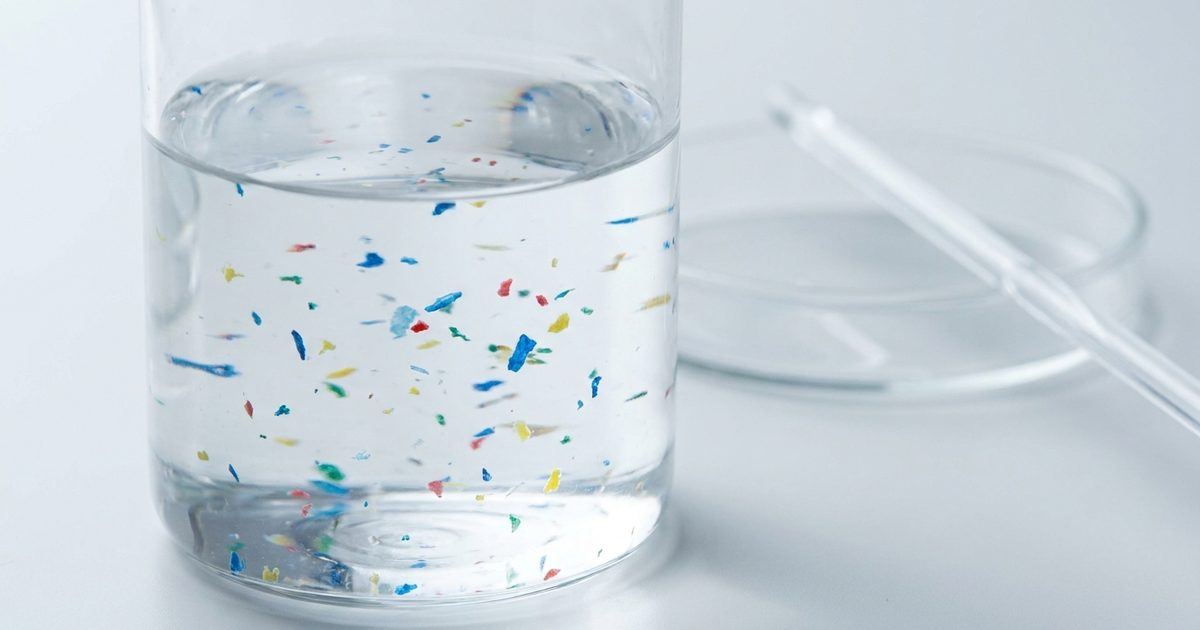
Microplastics and PFAS are two of the most persistent environmental contaminants people encounter in everyday life.
They can be found in places that seem surprisingly ordinary:
drinking water, food packaging, household dust, clothing, cookware, and indoor air.
Researchers have also detected plastic particles and PFAS-related chemicals in human biological samples, raising an important question:
What happens when exposure continues for years?
The science is still developing.
We know that humans are exposed to both microplastics and PFAS. We also know that each can interact with biological systems.
What is less certain is exactly how much exposure is required to produce specific health effects in humans—and whether combined exposure creates risks substantially different from exposure to either one alone.
That distinction matters.
The evidence supports reducing unnecessary exposure, but it does not support assuming that every microscopic particle or trace chemical causes disease.
Microplastics vs PFAS: What's the Difference?
Microplastics and PFAS are often discussed together, but they are fundamentally different.
Microplastics
Microplastics are small plastic particles generally defined as particles smaller than 5 millimeters.
They can originate from:
- Plastic packaging
- Degraded consumer products
- Synthetic clothing
- Tire wear
- Industrial materials
- Paint and coatings
- Larger plastics breaking down over time
Some particles are large enough to pass through the digestive system, while smaller particles—including nanoplastics—may behave differently.
PFAS
PFAS stands for per- and polyfluoroalkyl substances.
It describes a large family of fluorinated chemicals used for properties such as:
- Water resistance
- Grease resistance
- Stain resistance
- Heat resistance
- Chemical stability
PFAS have been used in many industrial and consumer applications.
Their defining characteristic is their unusual chemical stability.
Some PFAS can remain in the environment for extremely long periods and can persist in the human body for years.
Are Microplastics and PFAS Found in the Human Body?
Evidence increasingly indicates that human exposure is widespread.
Researchers have reported plastic particles or suspected plastic-derived particles in biological samples including:
- Blood
- Lung tissue
- Placental tissue
- Other human tissues
PFAS are even more extensively documented in human biomonitoring.
Many people have measurable PFAS compounds in their blood.
This doesn't mean that everyone has the same exposure.
Levels can vary depending on:
- Drinking water
- Diet
- Occupation
- Consumer products
- Geographic location
- Household dust
- Previous exposures
And most importantly:
Detection does not automatically mean disease.
Finding a chemical or particle in the body is evidence of exposure.
It is not, by itself, evidence of a specific health outcome.
Why Scientists Are Studying Microplastics and PFAS Together
Most toxicology studies traditionally examine individual chemicals.
Real-world exposure is different.
People encounter mixtures.
A single person might be exposed to:
- PFAS through drinking water
- Microplastics through food
- Synthetic fibers through indoor dust
- Plastic packaging through diet
- Additional chemicals through household products
This has created growing interest in mixture toxicology.
Researchers want to know whether combinations of contaminants:
- Produce additive effects
- Interact with biological pathways
- Change how chemicals are absorbed
- Alter immune responses
- Affect cellular signaling
Some laboratory research involving microplastics and PFAS has identified changes in molecular and cellular pathways.
But these studies are not equivalent to proving that the same combination causes disease in humans.
Can Microplastics Carry PFAS?
Potentially, yes.
Plastic particles can interact with chemicals in their surrounding environment.
Researchers have investigated whether microplastics can adsorb contaminants onto their surfaces and potentially transport them.
The proposed mechanism is relatively straightforward:
Chemical + plastic particle → attachment to particle surface → transport through the environment
But the real-world importance of this mechanism remains uncertain.
A laboratory experiment demonstrating chemical binding to plastic does not automatically mean that microplastics significantly increase human PFAS exposure.
The effect depends on:
- Type of plastic
- Particle size
- Surface characteristics
- Chemical concentration
- Water chemistry
- Gut conditions
- Exposure duration
So the most accurate conclusion is:
Microplastics can interact with PFAS, but the extent to which this materially changes human exposure is still being investigated.
What Happens to Microplastics After We Consume Them?
The body does not treat every particle identically.
Larger particles may pass through the gastrointestinal tract.
Smaller particles may interact differently with intestinal barriers.
Research using laboratory and animal models suggests that some particles can:
- Interact with intestinal cells
- Cross biological barriers under certain conditions
- Trigger inflammatory responses
- Enter circulation
- Reach other tissues
Researchers are particularly interested in nanoplastics, which are substantially smaller than conventional microplastics.
Their tiny size may allow them to behave differently from larger particles.
However, determining how much of the plastic people consume is actually absorbed remains one of the major unanswered questions.
Microplastics and Inflammation
One of the most frequently investigated biological mechanisms is inflammation.
Laboratory studies have found that certain microplastic exposures can activate cellular pathways associated with:
- Oxidative stress
- Inflammatory signaling
- Cellular damage
- Immune activation
But laboratory exposure concentrations can differ dramatically from typical human exposure.
That makes dose one of the most important unanswered questions.
A biological effect observed at a high experimental concentration does not necessarily mean the same effect occurs at everyday environmental exposure levels.
PFAS Health Effects: What Do We Know?
PFAS have a much larger human epidemiology literature than microplastics.
Certain PFAS have been associated with changes in several biological systems.
Research has reported associations involving:
- Cholesterol levels
- Immune response
- Liver function
- Thyroid-related processes
- Pregnancy and developmental outcomes
- Certain cancers for specific PFAS and exposure groups
Some PFAS have also been associated with reduced antibody responses to certain vaccines, particularly in children.
Importantly, PFAS are not one chemical.
There are thousands of compounds in the broader PFAS family, and their biological behavior can differ considerably.
Therefore, it is misleading to treat every PFAS as though it has exactly the same toxicity.
Why PFAS Persistence Matters
One of the major differences between PFAS and many ordinary chemicals is persistence.
Some PFAS compounds can remain in the human body for years.
Depending on the compound, biological half-lives can range from months to several years.
That means repeated exposure can matter even when individual exposures appear small.
Think of it less like:
one large exposure
and more like:
repeated inputs + slow elimination = increasing body burden
This is one reason scientists pay attention to chronic exposure.
Where Do People Encounter PFAS?
PFAS exposure can come from multiple sources.
Potential sources include:
Drinking Water
Contaminated groundwater and municipal water supplies can be important exposure pathways in affected communities.
Food Packaging
Some grease-resistant food-contact materials have historically used PFAS-related chemistry.
Stain-Resistant Products
PFAS have been used in certain treatments designed to repel water, oil, and stains.
Household Dust
PFAS-containing consumer products can contribute to indoor dust exposure.
Outdoor and Performance Clothing
Some water- and stain-resistant textiles have historically relied on fluorinated treatments.
Industrial Exposure
People working in certain industries can experience higher occupational exposure.
The relative importance of each pathway varies considerably between individuals.
Where Do Microplastics Come From?
Microplastic exposure is similarly diverse.
Important sources include:
- Bottled and packaged foods
- Drinking water
- Household dust
- Synthetic textiles
- Food-processing equipment
- Plastic containers
- Tire and road wear
- Degraded environmental plastics
Indoor environments are particularly interesting because people spend much of their time indoors.
Synthetic textiles can release fibers during both washing and everyday wear.
These fibers can accumulate in household dust and potentially become airborne.
Bottled Water and Microplastics
Bottled water has received substantial attention because researchers have detected plastic particles in some bottled-water samples.
The exact number of particles can vary enormously depending on:
- Detection technology
- Bottle composition
- Cap material
- Manufacturing
- Storage
- Sampling methodology
Recent advances in analytical techniques have also allowed scientists to detect particles much smaller than previously measurable.
That means older studies may have underestimated the total number of particles.
But again:
More particles detected does not automatically mean proportionally greater health risk.
Researchers still need to establish which particles are absorbed, where they travel, and what concentrations produce biological effects.
Are Microplastics in Food Dangerous?
Microplastics have been detected in a wide range of foods.
Potential sources include:
- Seafood
- Salt
- Bottled water
- Processed foods
- Agricultural environments
- Packaging
However, exposure assessment remains challenging.
Scientists still need better answers to questions such as:
- How much do people actually ingest?
- How much is absorbed?
- How quickly are particles eliminated?
- Which particle sizes are most biologically active?
- Which polymers matter most?
- What is the impact of long-term exposure?
The current evidence supports concern and further research.
It does not justify claiming that eating food containing a detectable microplastic particle will cause disease.
What About Microplastics in Seafood?
Seafood can encounter microplastics through contaminated marine environments.
Shellfish are of particular interest because some species filter large volumes of water.
Fish can also ingest plastic particles directly or indirectly through their food.
This creates a potential dietary exposure pathway.
But seafood remains nutritionally valuable.
Fish provides:
- Protein
- Omega-3 fatty acids
- Selenium
- Vitamin B12
- Other micronutrients
Avoiding seafood entirely because of microplastics may therefore create a nutritional trade-off.
A better strategy is to consider the overall exposure-benefit balance.
Can Microplastics Affect the Immune System?
This is one of the major areas of current research.
Laboratory studies have identified potential interactions with immune-related pathways.
Possible mechanisms include:
- Oxidative stress
- Inflammatory signaling
- Changes in immune-cell activity
- Alteration of cellular communication
PFAS have also been investigated for immunological effects, particularly regarding antibody responses.
This makes the intersection of the two topics scientifically interesting.
But there is an important limitation:
Evidence that two substances affect similar biological pathways does not prove that exposure to both causes a specific human disease.
More epidemiological research is needed.
Could Microplastics and PFAS Have Additive Effects?
Possibly.
Scientists studying chemical mixtures consider several possibilities.
Additive effect
Two exposures contribute independently to the same biological outcome.
Synergistic effect
The combined effect is greater than expected from either exposure alone.
Antagonistic effect
One exposure reduces the effect of another.
Current laboratory research provides reasons to investigate these possibilities for microplastics and PFAS.
But the real-world significance remains uncertain.
The concentration, particle size, PFAS type, exposure route, and duration all matter.
The Problem With “Low Dose Means Safe”
A tiny exposure is not automatically dangerous.
But the opposite assumption isn't necessarily justified either.
For persistent chemicals such as some PFAS, repeated exposure can increase body burden because the body eliminates them slowly.
For microplastics, the situation is different because particles and their biological behavior vary enormously.
The important questions are:
How much?
How often?
Which compound or particle?
How long does it remain in the body?
What biological effect occurs at realistic exposure levels?
This is much more useful than treating all “trace exposures” as either completely harmless or inherently toxic.
What Science Still Doesn't Know
Despite the growing research, major questions remain.
Scientists still need better evidence on:
- Long-term human health effects of microplastics
- Effects of chronic nanoplastic exposure
- Which particles are absorbed most efficiently
- Tissue accumulation over decades
- Real-world microplastic dose
- Microplastic-PFAS interactions in humans
- Effects of combined environmental exposures
This uncertainty shouldn't be interpreted as proof of safety.
But it also shouldn't be turned into proof of harm.
The scientifically honest position is:
Exposure is established. Specific long-term health risks are still being quantified.
How to Reduce Microplastic and PFAS Exposure
You don't need to eliminate every plastic product in your life.
Instead, focus on the sources you can realistically control.
1. Don't Heat Food in Plastic
Heat can increase the migration of substances from some plastic materials.
Use:
- Glass
- Stainless steel
- Ceramic
for hot food whenever practical.
2. Store Food in Glass or Stainless Steel
This can reduce direct contact between food and plastic packaging.
It's especially useful for:
- Hot leftovers
- Acidic foods
- Fatty foods
- Long-term storage
3. Use PFAS-Tested Water Filtration
If PFAS contamination is a concern in your area, don't rely on a generic “water filter” claim.
Look for systems specifically tested or certified for PFAS reduction.
The exact contaminant-removal performance varies substantially between filter technologies.
4. Reduce Unnecessary Plastic Packaging
You don't need to eliminate packaged food completely.
But when practical:
- Buy unpackaged produce
- Choose bulk foods
- Use reusable containers
- Avoid unnecessary single-use packaging
This can reduce both plastic waste and some potential food-contact exposure pathways.
5. Reduce Synthetic Textile Shedding
Synthetic clothing can release fibers during washing.
Practical steps include:
- Wash synthetic clothing only when necessary
- Avoid unnecessarily aggressive washing
- Consider microfiber-capture devices
- Choose natural fibers for some everyday garments
This won't eliminate microfiber exposure, but it can reduce emissions.
6. Control Household Dust
Indoor dust can contain particles and chemicals originating from consumer products.
Simple measures include:
- Regular vacuuming
- Damp dusting
- Washing hands before eating
- Ventilating rooms
- Cleaning high-dust surfaces
Reducing dust exposure is especially relevant for young children because they spend substantial time close to floors and surfaces.
What About Nonstick Cookware?
PFAS chemistry has historically been associated with certain nonstick coatings.
Modern cookware regulations and formulations have changed substantially, and not every nonstick product should be treated as equivalent.
If you want to minimize uncertainty, alternatives include:
- Stainless steel
- Cast iron
- Carbon steel
- Ceramic cookware
The practical point is not that every nonstick pan is dangerous.
It is that cookware with specialized chemical coatings adds another potential exposure pathway that can often be avoided.
What To Check When Buying Products
Marketing language isn't enough.
Look for:
- Independent testing
- Clear material disclosure
- PFAS-free claims backed by credible testing
- Specific contaminant-removal certifications
- Transparent manufacturer documentation
- Testing performed using recognized standards
Be cautious with vague claims such as:
“Non-toxic.”
“Chemical-free.”
“Clean.”
These phrases can sound reassuring without telling you what was actually tested.
The Best Signal is specific, measurable information.
Microplastics and PFAS: What Should You Actually Worry About?
The biggest mistake is focusing on one exposure while ignoring everything else.
Your overall exposure comes from many small pathways.
A more useful hierarchy is:
High-value changes
- Test or filter drinking water when PFAS contamination is relevant
- Don't heat food in plastic
- Reduce unnecessary food packaging
- Control indoor dust
- Limit unnecessary use of stain- and water-resistant products
Lower-priority changes
- Eliminating every plastic object
- Throwing away all synthetic clothing
- Avoiding every packaged food
- Trying to achieve zero microplastic exposure
Zero exposure is unrealistic.
Exposure reduction is achievable.
The Bottom Line
Microplastics and PFAS are no longer hypothetical environmental concerns.
Human exposure is widespread, and scientists have detected PFAS and plastic-related particles in human biological samples.
PFAS have a substantial body of research linking certain compounds and exposure levels with changes in immune, metabolic, hormonal, and other biological systems.
Microplastic research is newer and more uncertain.
Laboratory and animal studies show that certain particles can interact with cells and biological pathways, but the long-term health consequences of typical human exposure remain an active area of investigation.
The possibility that microplastics can interact with or transport other chemicals—including PFAS—is scientifically plausible and supported by laboratory research, but its importance to human health has not yet been established.
So the most defensible conclusion is not:
“Microplastics and PFAS are definitely making everyone sick.”
Nor is it:
“Tiny exposures don't matter.”
It is:
Exposure is widespread, some health effects are well established for specific PFAS, microplastic risks remain uncertain, and reducing unnecessary exposure is a reasonable precaution.
Focus on the easiest high-impact changes:
safer food storage, tested drinking water, less unnecessary plastic packaging, lower indoor dust, and fewer unnecessary chemical treatments.
You don't need a plastic-free life.
You need a smarter exposure strategy.
Sources
- World Health Organization — Microplastics in Drinking Water Review of available evidence on human exposure to microplastics through drinking water and the remaining scientific uncertainties.
- U.S. Environmental Protection Agency — PFAS Current federal information covering PFAS exposure, health research, regulation, and drinking-water contamination.
- Agency for Toxic Substances and Disease Registry — PFAS and Human Health Scientific overview of PFAS exposure, biological persistence, and observed health associations.
- National Institute of Environmental Health Sciences — PFAS Research covering PFAS exposure, toxicology, immune effects, developmental outcomes, and environmental persistence.
- National Institute of Standards and Technology — Microplastics Research Research into methods for detecting and measuring microplastics and nanoplastics.
- Science Advances — Microplastics as Chemical Carriers Research investigating how microplastic particles can interact with and transport other environmental chemicals.
- Cell Reports Medicine — Microplastics and PFAS Molecular Interactions Systems-level research examining potential biological interactions between microplastic exposure and PFAS.
- European Food Safety Authority — Microplastics and Nanoplastics in Food Scientific assessment of exposure through food and the current evidence surrounding potential health risks.
- U.S. Food and Drug Administration — PFAS in Food and Food Packaging Information about PFAS exposure through food, food-contact materials, and regulatory monitoring.
- UNEP — Chemicals and Pollution Action Broader scientific and policy resources covering persistent chemicals, plastics, and environmental exposure.