The Cow’s Diet Ends Up in Your Glass
Grass, grain, organic, or something in between? What a dairy cow eats can change the milk you buy.
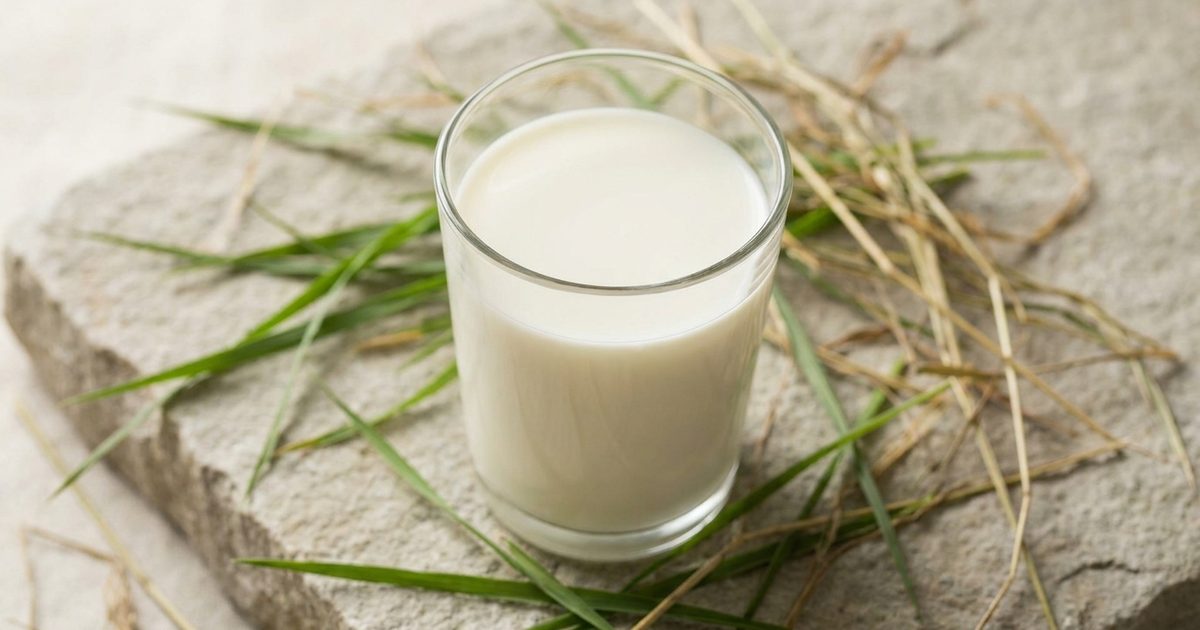
A carton of milk can look remarkably simple.
But before it reaches your refrigerator, there is an entire production system behind it — and one of the most important variables is something consumers rarely see:
what the cow was fed.
Dairy cattle may consume fresh pasture, hay, silage, grains, protein supplements, or carefully formulated combinations of all of them. Those differences can influence the composition of the resulting milk, particularly its fatty acids and certain fat-soluble compounds.
That doesn't mean every pasture-based product is automatically superior, or that conventional dairy is inherently unhealthy.
It means something more basic:
Milk reflects the animal that produced it.
And if you want to understand the differences between conventional, organic, and grass-fed dairy, the label is only the beginning.
The First Thing to Know: “Organic” Isn't “Grass-Fed”
These terms are often treated as interchangeable.
They aren't.
USDA organic rules require organic ruminants to have access to pasture throughout the grazing season and obtain at least 30% of their dry matter intake from pasture during that period. The grazing season must last at least 120 days, although its exact length can vary with local conditions.
That still leaves room for other organic feed.
Organic dairy cattle can receive organically produced feed outside of pasture, including stored forage and organic grain. The organic label therefore tells you something meaningful about how the animal was raised, but it does not mean the cow ate grass exclusively.
That's an important distinction for shoppers who specifically want pasture-only dairy.
In simple terms:
Organic = a regulated production system.
100% grass-fed = a feeding claim.
They answer different questions.
So What Does a Conventional Dairy Cow Eat?
Many dairy farms use a feeding strategy called a Total Mixed Ration, or TMR.
Instead of relying on one ingredient, farmers combine different feeds into a calculated ration designed to provide the nutrients cattle need for health, reproduction, and milk production.
A typical ration can contain:
- Forage such as hay or silage
- Corn or other energy-rich feeds
- Protein sources such as soybean meal
- Vitamins and minerals
- Other ingredients formulated around the herd's nutritional requirements
The exact recipe varies considerably between farms.
The University of Minnesota's dairy extension program describes TMR feeding as a system that combines feeds into a single mixture formulated around the cow's nutritional needs.
This is why it is difficult to make assumptions about a cow's diet based purely on the type of dairy operation.
Two farms can both produce conventional milk while using somewhat different feed programs.
Why the Feed Can Change the Milk
The cow doesn't simply convert feed into milk without changing anything along the way.
The nutrients and fatty acids in the diet influence the composition of milk fat.
Research comparing pasture-based and non-pasture feeding systems has repeatedly found differences in the fatty-acid profile of milk.
For example, a controlled study comparing cows receiving a conventional total mixed ration with cows receiving a mixed ration plus daily pasture access found that the pasture-access group produced milk with higher concentrations of omega-3 fatty acids, vaccenic acid, and CLA, alongside lower concentrations of several saturated fatty acids.
The researchers also observed higher concentrations of certain fat-soluble compounds, including beta-carotene, retinol, and alpha-tocopherol, in milk from cows with pasture access.
So the difference isn't simply a marketing story.
Changing the cow's diet can change the milk's composition.
Grass Changes More Than the Fat Profile
Pasture can influence milk in another interesting way: its naturally occurring plant compounds.
Fresh grass contains carotenoids and other fat-soluble compounds that can enter the milk.
Research examining different grass-supply systems has found that grazing cows can produce milk with higher concentrations of beta-carotene and certain fat-soluble vitamins compared with cows receiving diets dominated by total mixed rations or concentrates.
That can even affect the appearance of dairy products.
Ever wondered why some butter is much yellower?
One reason is beta-carotene.
Milk produced from cows consuming substantial amounts of fresh pasture can contain more of this pigment, contributing to a deeper yellow color in milk fat and products such as butter.
But color shouldn't be treated as a laboratory test.
Yellow butter can provide a clue about diet, but it cannot prove that a cow was exclusively grass-fed.
The Omega-3 Difference Is Real — But Context Matters
One of the most frequently discussed differences between feeding systems is the balance of omega-3 and omega-6 fatty acids.
A large U.S. study analyzed 1,163 milk samples collected over three years and compared milk from nearly 100% forage-fed cows with conventional and organic milk. The study found meaningful differences in fatty-acid composition between the systems.
Other research has reached a similar general conclusion: pasture and forage-heavy feeding tend to shift milk fat toward greater amounts of omega-3 fatty acids, vaccenic acid, and CLA.
However, this deserves a little nuance.
A different meta-analysis comparing organic and conventional dairy found that organic dairy generally contained more omega-3 fatty acids and several related fatty acids than conventional dairy. The authors suggested differences in feeding practices were one likely explanation.
In other words, the production system matters, but the categories overlap.
Organic isn't identical to grass-fed.
Grass-fed isn't identical to organic.
And neither category guarantees that every product will have the same nutritional profile.
What Does “Grass-Fed” Actually Tell You?
This is where consumers need to slow down.
The words on the front of a package may sound more precise than they actually are.
If your objective is to avoid grain, a generic grass-related marketing statement isn't necessarily enough information.
Instead, look for language that clearly defines the feeding program.
Stronger signals include:
100% grass-fed
100% forage-fed
No grain
Published feeding standards
Independent certification
The more specific the claim, the easier it becomes to understand what you're actually buying.
And if a company publishes its feeding practices, that's even better.
Don't Confuse Pasture Access With a Pasture-Only Diet
This distinction is particularly important with organic dairy.
USDA rules require organic ruminants to graze during the grazing season and receive at least 30% of their dry matter intake from pasture during that period.
But the remaining portion of their diet can come from other permitted feed.
That means an organic cow can genuinely spend time grazing while still receiving supplemental feed.
So when you're comparing products, ask yourself what you actually care about:
Do you want certified organic production?
Or:
Do you specifically want milk from cows whose diet is entirely forage-based?
Those are not necessarily the same purchase.
What About Antibiotics?
Antibiotic use is another area where dairy discussions can become overly simplified.
The cow's diet does not directly determine whether antibiotics are used.
Animal health is influenced by many factors, including:
- Herd management
- Housing
- Hygiene
- Disease prevention
- Veterinary oversight
- Animal density
- Farm practices
So it is better to treat antibiotic use as a production-system question, rather than assuming that grass-fed automatically means low-antibiotic or that conventional automatically means high-antibiotic.
Feed is one variable.
Farm management is the larger picture.
A Better Way to Shop for Dairy
If you're trying to choose dairy based on how the cows were fed, here's a more useful checklist.
1. Decide what matters to you
Are you prioritizing organic certification, pasture access, 100% forage feeding, or a particular nutritional profile?
Different priorities lead to different products.
2. Read the entire feeding claim
Don't stop at a large word such as grass-fed.
Look for details explaining what the animals are actually fed.
3. Look for “no grain” if that's important
If your goal is to avoid supplemental grain, find an explicit statement rather than assuming.
4. Investigate the producer
A brand that publishes its feeding standards gives you considerably more information than one relying entirely on marketing language.
5. Don't treat one label as the whole story
Organic, pasture-raised, grass-fed, and conventional describe different aspects of production.
None of them tells you everything.
The Bottom Line
The biggest hidden ingredient in dairy isn't an ingredient at all.
It's the production system behind the milk.
What a cow eats can influence the fatty acids, antioxidants, carotenoids, and other components that eventually appear in its milk. Research comparing pasture-based, organic, and conventional systems has demonstrated measurable differences.
But there's no magic word on a carton.
Organic doesn't automatically mean grass-only.
Grass-fed doesn't necessarily tell you the entire feeding program.
And appearance alone can't prove how a cow was fed.
If the cow's diet matters to you, look past the front label and investigate the standards behind it.
Because ultimately:
You aren't just buying milk. You're buying the system that produced it.
Sources
- University of Minnesota Extension — Feeding Total Mixed Rations An overview of how TMR systems combine forage, grains, protein sources, vitamins, and minerals to meet dairy-cow nutritional requirements.
- USDA Agricultural Marketing Service — Organic Standards Current USDA requirements covering pasture access, organic livestock management, and feed requirements.
- USDA Agricultural Marketing Service — Calculating Dry Matter Intake From Pasture Detailed guidance explaining the 30% pasture dry-matter requirement and how pasture intake is calculated.
- The Effect of Sustainable Feeding Systems on Milk Fatty Acids and Antioxidants Experimental research comparing total mixed ration feeding with a system combining TMR and pasture access.
- The Mode of Grass Supply to Dairy Cows Impacts Fatty Acid and Antioxidant Profile of Milk Research examining how different methods of supplying grass influence milk fatty acids, carotenoids, and other compounds.
- Enhancing the Fatty Acid Profile of Milk Through Forage-Based Rations A U.S.-wide analysis of 1,163 milk samples comparing forage-based, conventional, and organic production systems.
- Comparison of Nutritional Quality Between Conventional and Organic Dairy Products: A Meta-Analysis A meta-analysis examining differences in fatty acids and other nutritional characteristics between organic and conventional dairy.
- Milk Composition and Flavor Under Different Feeding Systems Review of how pasture and non-pasture feeding systems can affect milk composition and processing characteristics.