Farmed Salmon Has a Contaminant Problem
Older retail testing found substantially higher PCB concentrations in farmed salmon. Here's what that means for choosing salmon today.
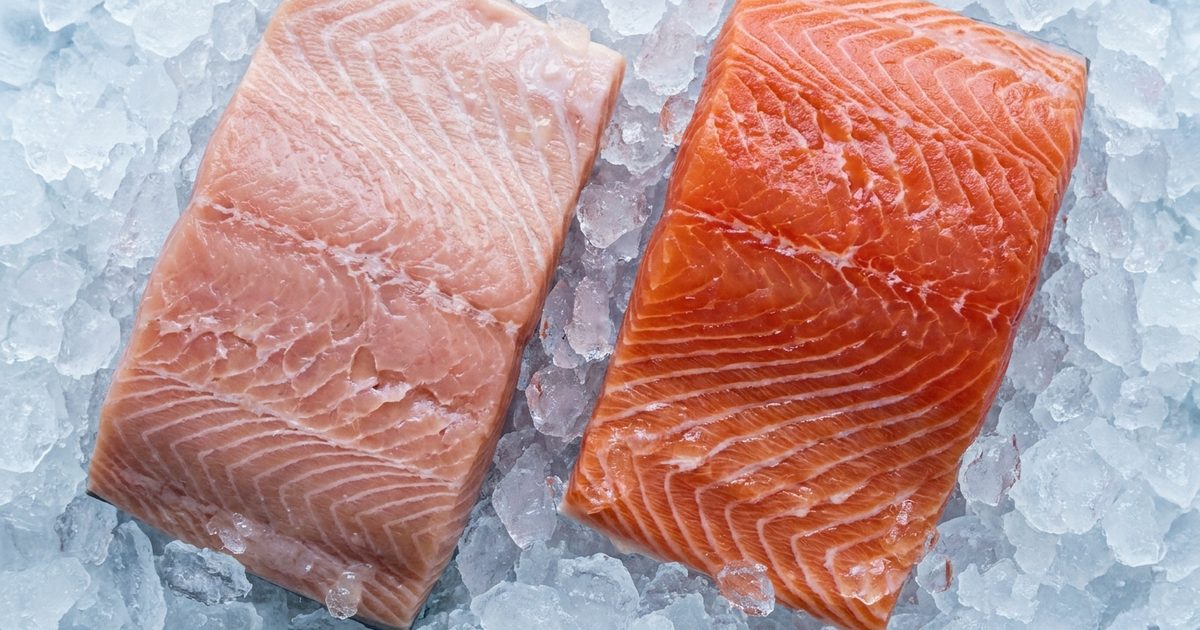
Salmon has a reputation as one of the healthiest foods you can buy.
It's rich in protein, omega-3 fatty acids, vitamin B12, selenium, and other nutrients.
But there's another side of the salmon story that receives much less attention:
contaminants.
Because salmon is a relatively fatty fish, persistent chemicals that accumulate in animal fat can become part of the equation. Among the contaminants researchers have investigated are polychlorinated biphenyls, or PCBs.
One of the most widely cited retail studies, published in Science in 2004, found substantially higher concentrations of PCBs and other persistent organic pollutants in farmed salmon than in wild salmon. The study analyzed hundreds of retail samples collected across multiple regions.
That finding does not mean modern farmed salmon is automatically unsafe.
It also doesn't mean you should stop eating salmon.
The more useful conclusion is simpler:
If you eat salmon frequently and want to minimize exposure to persistent contaminants, the source and species of salmon deserve attention.
Farmed Salmon vs Wild Salmon: What's the Difference?
The most important distinction is how the fish is produced.
Farmed salmon are raised in controlled aquaculture systems and receive formulated feed.
Wild salmon obtain their food from naturally occurring marine ecosystems.
Those differences affect more than where the fish comes from.
They can influence:
- Fat content
- Fatty-acid composition
- Contaminant exposure
- Feed-derived nutrients
- Growth rate
- Overall composition
The amount of contamination can also vary considerably between individual fish and farming regions.
That's why a single number should never be treated as a permanent contaminant level for every farmed salmon sold today.
The Study That Changed the Farmed Salmon Debate
One of the most influential studies on salmon contamination was published in Science in 2004.
Researchers analyzed approximately 700 salmon samples from retail markets across North America, Europe, and Chile.
The results attracted significant attention because farmed salmon generally contained substantially higher concentrations of persistent organic pollutants than wild salmon.
The analysis reported that farmed salmon had approximately 16 times the dioxin-like PCB concentrations found in wild salmon on average.
But there's an important distinction:
This was a 2004 retail study.
It should not be interpreted as:
Every farmed salmon sold in 2026 contains 16 times more PCBs than every wild salmon.
Contaminant levels can change as:
- Feed formulations change
- Fish-oil sources change
- Production regions change
- Environmental contamination changes
- Farming practices evolve
The study remains important because it demonstrated that production system and sourcing can materially affect contaminant exposure.
What Are PCBs?
PCBs are a group of industrial chemicals that were widely used in electrical equipment, hydraulic systems, and other applications during the twentieth century.
Their production was banned in the United States in 1979.
The problem is that PCBs are extremely persistent.
They can remain in environmental systems for decades and accumulate in organisms.
The EPA describes PCBs as probable human carcinogens and notes potential effects involving the immune, reproductive, nervous, and endocrine systems.
PCBs are also lipophilic, meaning they tend to associate with fat.
That matters for salmon.
A fatty fish can accumulate fat-soluble contaminants from its environment or, in aquaculture, from its feed.
Why Do Farmed Salmon Sometimes Have Higher PCB Levels?
The explanation isn't simply:
Farmed fish = polluted fish.
The bigger issue is exposure pathways.
Historically, farmed salmon diets relied heavily on ingredients such as fish meal and fish oil.
Those ingredients can contain persistent contaminants because they originate from marine organisms that may already contain accumulated pollutants.
When contaminated ingredients are concentrated into feed and consumed by farmed fish, contaminants can be transferred into the fish's tissues.
This creates an important pathway:
Marine environment → smaller fish → fish meal/fish oil → farmed salmon
Wild salmon have a different and more complex feeding history.
That doesn't mean wild salmon are contaminant-free.
It means their exposure pathway is different.
Are PCBs Still Found in Salmon?
Yes.
PCBs remain environmental contaminants even though their production was banned decades ago.
The EPA continues to monitor PCB contamination in aquatic organisms and fish tissue.
The agency explains that PCBs can accumulate in aquatic organisms and provides fish-tissue screening values based on different consumption frequencies.
This is why the question isn't simply:
“Does salmon contain PCBs?”
The better questions are:
How much?
Which salmon?
How frequently is it eaten?
What other sources of exposure are present?
Does Eating Salmon With PCBs Mean You'll Get Sick?
No.
This distinction is critical.
Detecting a contaminant is not the same thing as demonstrating disease.
Risk depends on:
- Concentration
- Serving size
- Frequency of consumption
- Duration of exposure
- Body weight
- The specific contaminant
- Individual susceptibility
A person who eats salmon occasionally has a very different exposure profile from someone consuming the same higher-contaminant product several times every week for decades.
This is why toxicology and environmental-health agencies generally use exposure models, rather than treating detection as an automatic health outcome.
A risk signal is not a diagnosis.
What About PCB Safety Limits?
This is where some online discussions become confusing.
Different agencies and jurisdictions use different regulatory limits, screening values, and consumption assumptions.
A screening value is not necessarily the same thing as a legal food-tolerance limit.
It may be designed to estimate whether a particular fish concentration could present an increased risk under a specified consumption pattern.
The EPA, for example, uses fish-tissue screening values that vary according to assumed consumption frequency.
That means a concentration that might be acceptable under occasional consumption could produce a different risk calculation under very frequent consumption.
The important takeaway
Don't interpret:
“Above a screening value”
as:
“One serving is dangerous.”
The underlying exposure assumptions matter.
Farmed Salmon and Wild Salmon Aren't Nutritionally Identical
Contaminants aren't the only difference.
Farmed and wild salmon can have different amounts and ratios of:
- Total fat
- Omega-3 fatty acids
- Omega-6 fatty acids
- Protein
- Vitamins
- Minerals
Farmed salmon is often fattier than many wild salmon species.
That can mean more total omega-3 per serving in some cases.
But higher total fat can also provide more storage capacity for fat-soluble contaminants.
This creates an interesting trade-off:
More fat can mean more omega-3 — but it can also mean more opportunity for fat-soluble contaminants to accumulate.
That doesn't automatically make one type “healthy” and the other “unhealthy.”
It means the comparison needs more than one metric.
What About Mercury in Salmon?
This is an important distinction because salmon is often discussed in the same conversations as mercury-containing seafood.
According to the FDA's current consumer seafood advice, salmon is classified as a “Best Choice” because it is among the lower-mercury seafood options.
So the concern discussed in this article is primarily PCBs and other persistent organic pollutants, not mercury.
That matters because:
Low mercury does not automatically mean zero contaminants.
And:
Higher PCB exposure does not mean salmon is generally unsafe to eat.
Different contaminants require different assessments.
Is Wild Salmon Always Cleaner?
Not necessarily.
“Wild” describes how the fish was caught.
It does not guarantee that the fish came from an uncontaminated environment.
Wild fish can accumulate contaminants from the ecosystems in which they live.
Contamination can vary according to:
- Species
- Location
- Age
- Size
- Fat content
- Environmental conditions
- Food-web position
So the more accurate statement is:
Wild salmon has generally shown lower PCB contamination than farmed salmon in important comparative studies, but wild does not mean contaminant-free.
That distinction is much more useful than simply labeling one category “clean.”
Why Alaska Wild Salmon Is Popular With Contaminant-Conscious Shoppers
Alaska is particularly relevant to wild salmon buyers because commercial finfish farming is prohibited under Alaska law, with limited exceptions for nonprofit hatchery activities.
That means salmon marketed as wild Alaska salmon is associated with a wild fishery rather than conventional commercial salmon farming within Alaska.
Alaska produces several major wild salmon species, including:
- Sockeye
- Chinook
- Coho
- Pink
- Chum
For shoppers specifically trying to avoid farmed Atlantic salmon, clearly identified wild Alaska salmon can therefore be a useful sourcing signal.
But species still matters.
Wild sockeye, coho, chinook, pink, and chum aren't nutritionally identical.
Which Salmon Should You Buy?
If your primary goal is minimizing PCB exposure, a practical strategy is to prioritize clearly identified wild salmon.
Good options to look for include:
Wild Alaska Sockeye
Often prized for its strong flavor, deep color, and relatively high omega-3 content.
Wild Coho
Generally milder and less fatty than sockeye, depending on the fishery and product.
Wild Pink Salmon
Usually smaller and lighter, making it a common affordable wild option.
Wild Chum Salmon
Often leaner and less expensive than premium wild species.
Wild Chinook
Rich and fatty, but typically more expensive and more variable in availability.
The goal isn't necessarily to find the “perfect” salmon.
It's to avoid making the assumption that all salmon products have the same contaminant profile.
What Does “Atlantic Salmon” Mean?
This is another useful label distinction.
Most Atlantic salmon sold in supermarkets is farmed.
That is because commercial fishing for Atlantic salmon is highly restricted or prohibited in many regions where wild populations have declined.
As a result, when you see:
Atlantic salmon
on a typical supermarket package, it's worth checking whether the label also identifies the fish as farm-raised.
Don't assume that “Atlantic” means wild.
Likewise, don't assume that “salmon” by itself tells you how the fish was produced.
How Often Should You Eat Salmon?
Current FDA consumer guidance actually encourages seafood consumption and lists salmon among its Best Choices.
So the evidence does not support turning salmon into a food that consumers should simply avoid.
Instead, think about variety.
Rather than eating the same salmon product every day, rotate among different seafood choices.
That can help diversify your diet and reduce dependence on one particular species or source.
For people who are especially concerned about persistent contaminants, choosing clearly identified wild salmon more often is a reasonable way to reduce exposure based on the historical comparative evidence.
Farmed vs Wild Salmon: Quick Comparison
Factor
Farmed Salmon
Wild Salmon
Production
Aquaculture
Wild-caught
Feed
Formulated feed
Natural ecosystem
Fat content
Often higher
Varies by species
Omega-3
Generally high
Generally high
PCB exposure
Historically higher in comparative retail studies
Generally lower in those studies
Mercury
Usually low
Usually low
Contamination
Varies by feed and farm
Varies by ecosystem
Origin
Often farmed Atlantic salmon
Species and fishery should be identified
Best buying signal
Transparent farm/feed information
Species + wild origin + fishery
The important word is varies.
Neither category has one universal contaminant profile.
The Problem With Old PCB Studies
One of the biggest mistakes in discussions about farmed salmon is taking a landmark study from 2004 and treating it as a current universal measurement.
The Science study was important.
But it was also conducted more than two decades ago.
Since then, the aquaculture industry has changed.
Feed ingredients have changed.
Contaminant levels in some feed ingredients have changed.
Production systems have changed.
Consumer guidance has also evolved.
Therefore, the old 16× figure should be treated as historical comparative evidence, not a current laboratory measurement for every farmed salmon product.
That distinction makes the evidence more useful, not less.
What Should You Look For on a Salmon Package?
If you're trying to make a lower-contaminant choice, don't stop at the word “salmon.”
Check the species
Look for:
- Sockeye
- Coho
- Chinook
- Pink
- Chum
- Atlantic
Check whether it's wild or farmed
Look for explicit wording such as:
Wild-caught
or
Farm-raised
Check the origin
A specific origin such as:
Alaska
is more informative than vague geographic marketing.
Look for testing information
If a brand publishes independent contaminant testing, that can provide more useful information than a generic health claim.
Don't judge by color alone
Deep red-orange flesh does not prove a fish is wild or low in contaminants.
The Smartest Way to Eat Salmon
You don't need to choose between:
“Eat salmon every day.”
and
“Never eat salmon again.”
There's a much more reasonable middle ground.
If salmon is an occasional food
The contaminant concern is generally less significant than it would be with very frequent consumption.
If you eat salmon several times a week
Source becomes more important.
Consider rotating species and choosing clearly identified wild salmon more often.
If you want maximum transparency
Look for products that disclose:
- Species
- Harvest method
- Geographic origin
- Farm or fishery
- Independent contaminant testing
The Best Signal is not a marketing phrase.
It's measurable information about the actual fish.
The Bottom Line: Farmed or Wild Salmon?
The strongest conclusion from the research is not that farmed salmon is “toxic.”
It is that farmed and wild salmon can have meaningfully different contaminant profiles, and historical retail testing found substantially higher PCB concentrations in farmed salmon.
PCBs are persistent environmental contaminants that can accumulate in aquatic organisms and are recognized by the EPA as a significant human-health concern.
At the same time, salmon remains one of the seafood choices recommended by the FDA for its nutritional benefits and relatively low mercury content.
So the practical takeaway is:
Don't fear salmon.
Choose your source carefully.
If you eat salmon frequently and want to minimize exposure to persistent contaminants, clearly labeled wild salmon — particularly wild Alaska salmon — is a reasonable preference.
And remember:
Wild doesn't mean contaminant-free.
Farmed doesn't mean unsafe.
The quality of the evidence depends on the species, source, contaminant, concentration, and frequency of exposure.
That's a much more useful way to think about salmon than simply asking whether it is “healthy” or “unhealthy.”
Sources
- Science — Global Assessment of Organic Contaminants in Farmed Salmon The landmark 2004 retail study comparing persistent organic contaminants in farmed and wild salmon from multiple geographic regions.
- U.S. EPA — PCBs Background on polychlorinated biphenyls, their persistence, environmental accumulation, and potential health effects. (epa.gov).
- U.S. EPA — National Lakes Assessment: PCBs in Fish Tissue Explains how the EPA evaluates PCB concentrations in fish tissue using consumption-based human-health screening values. (epa.gov).
- U.S. FDA — Advice About Eating Fish Current consumer guidance on seafood consumption, including salmon's classification as a “Best Choice” for mercury exposure. (fda.gov).
- National Institute of Environmental Health Sciences — PCBs Toxicological background on PCB exposure and potential human-health effects.
- Alaska Statutes — Finfish Farming Prohibited Current Alaska law governing commercial finfish farming and the exceptions for permitted activities. (akleg.gov).
- U.S. EPA — Human Health Screening Values for Fish Background on consumption-based contaminant screening and why exposure frequency affects risk calculations.
- FDA/EPA — Technical Information for Fish Consumption Advice Background on how federal agencies develop consumption recommendations and exposure-based seafood guidance.