Does Organic Actually Mean Safer?
Organic food benefits, pesticide residues, nutrition, risks, and which foods are actually worth buying organic.
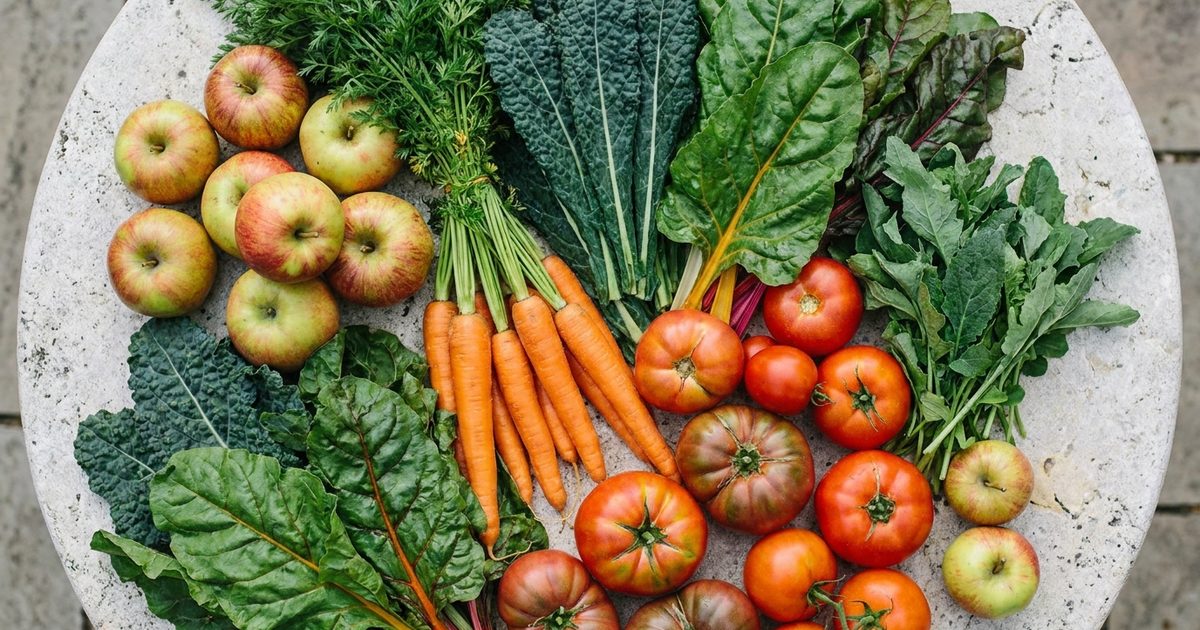
Walk through almost any supermarket and organic food comes with an implied promise:
Cleaner. Safer. Healthier.
But what does the organic label actually tell you?
The answer is narrower than many shoppers realize.
Organic certification primarily describes how agricultural products are produced and handled. It does not mean the finished food is free from pesticides, heavy metals, environmental pollutants, or other contaminants.
At the same time, dismissing organic food entirely would be just as misleading.
Research consistently finds that organic production can reduce exposure to certain synthetic pesticide residues. For some foods—particularly produce that tends to carry higher pesticide residues—the difference can be meaningful.
The bigger question is whether those differences translate into better long-term health.
The evidence is much less definitive.
So instead of asking:
“Is organic food healthier?”
A better question is:
“When does buying organic actually make a meaningful difference?”
Organic vs Conventional Food: The Quick Answer
Organic food isn't automatically more nutritious or completely free of contaminants.
But choosing organic can reduce exposure to certain agricultural chemicals.
A practical way to think about it:
Question
Organic Advantage?
Lower detection of some synthetic pesticide residues
Often yes
Completely pesticide-free
No
Free of heavy metals
No
More vitamins and minerals
Not consistently
Higher levels of some antioxidants
Possibly
Guaranteed healthier
No
Better choice for high-residue produce
Often reasonable
Worth buying organic for everything
Not necessarily
This distinction is important because organic certification is a production standard, not a health guarantee.
What Does “Organic” Actually Mean?
In the United States, organic food is regulated under USDA standards.
The rules govern things such as:
- Which agricultural inputs may be used
- How crops and livestock are produced
- How organic products are handled
- How ingredients are processed
- How products are labeled
Organic certification therefore tells you something about the production system.
It doesn't provide a complete chemical analysis of what's inside the food.
The major USDA labeling categories
100% Organic
All ingredients and processing aids, with limited exceptions, must meet organic requirements.
Organic
At least 95% of the ingredients must be certified organic, excluding certain allowed ingredients.
Made With Organic
At least 70% of the ingredients must be certified organic.
That means the word organic should always be interpreted in context.
Does Organic Mean Pesticide-Free?
No.
This is probably the biggest misconception surrounding organic food.
Organic agriculture can use pesticides and other crop-protection substances.
The important distinction is that organic production restricts which substances can be used and under what conditions.
Some approved substances are:
- Mineral-based
- Plant-derived
- Microbial
- Naturally occurring
- Synthetic substances specifically permitted under organic standards
And “natural” doesn't automatically mean harmless.
A chemical's risk depends on:
- Toxicity
- Dose
- Route of exposure
- Frequency
- Persistence
- Environmental behavior
The phrase “natural pesticide” therefore tells you very little about its actual hazard.
Are Organic Pesticides Safer?
Sometimes.
But there is no universal rule.
Organic agriculture uses a different set of pest-control strategies, including cultural practices, biological controls, and approved pesticides.
Some substances can still have environmental or toxicological concerns.
Copper-based pesticides are one example.
Copper compounds can accumulate in agricultural soils and can be harmful to aquatic organisms when they enter waterways.
The lesson isn't that organic farming is dangerous.
It is that:
Organic pesticide ≠ harmless pesticide.
The risk of a pesticide depends on the substance and the level of exposure—not simply whether the word “organic” appears on the farm's certification.
What Does the Research Say About Organic Food Nutrition?
This is where the marketing often gets ahead of the evidence.
Some studies have found differences in nutrient composition between organic and conventional foods.
But the results are not consistent enough to conclude that organic food is universally more nutritious.
Potential differences have been reported in:
- Polyphenols
- Certain antioxidants
- Vitamin C
- Mineral concentrations
- Fatty-acid profiles in some animal products
However, these differences can vary according to:
- Crop variety
- Soil
- Climate
- Storage
- Harvest timing
- Farming practices
- Study design
A food doesn't become nutritionally superior simply because it carries an organic certification.
The more important point
Eating a varied diet rich in fruits, vegetables, legumes, whole grains, nuts, and other minimally processed foods is likely to matter far more than whether every item is organic.
Does Organic Food Have Fewer Pesticide Residues?
This is where the evidence for organic is strongest.
Systematic reviews and observational research generally find that organic foods are less likely to contain detectable residues of certain synthetic pesticides.
That doesn't mean conventional produce is unsafe.
Food regulations are designed around allowable residue levels.
But exposure is not binary.
A person who eats produce every day may accumulate exposure to many different agricultural chemicals over time.
Reducing that exposure is one reasonable reason to choose organic.
Why Some Foods Are More Important Than Others
Not all produce has the same pesticide exposure profile.
Residue levels vary according to:
- Crop type
- Growing region
- Pest pressure
- Agricultural practices
- Chemical application
- Whether the edible portion is protected by a peel
- How the food is washed and prepared
This creates an important strategy:
Don't think “organic everything.”
Think:
“Which foods give me the biggest potential exposure reduction?”
Strawberries Are a Good Example
Strawberries frequently appear near the top of consumer pesticide-residue rankings.
There are several reasons.
The fruit has:
- A delicate surface
- No thick protective peel
- Multiple potential pest pressures
- High consumption as a fresh food
Because strawberries are often eaten whole, choosing organic can be a practical way to reduce exposure to certain pesticide residues.
But pesticide residue rankings change from year to year.
A list published several years ago should therefore not automatically be treated as a permanent ranking.
The Best Signal is current testing data.
What About Heavy Metals in Organic Food?
Organic certification does not eliminate heavy metals.
Plants take up elements from their growing environment.
Depending on location and soil conditions, both organic and conventional crops can contain:
- Cadmium
- Lead
- Arsenic
- Other naturally occurring or industrial contaminants
Sources can include:
- Soil
- Irrigation water
- Atmospheric deposition
- Historical industrial activity
- Agricultural inputs
This is one reason the assumption:
“Organic = toxin-free”
doesn't hold up.
A certified organic farm located in contaminated soil cannot simply make environmental contaminants disappear through certification.
What About Microplastics?
Microplastic exposure is another issue that organic certification does not completely address.
Food can encounter plastic contamination through:
- Packaging
- Processing equipment
- Water
- Agricultural materials
- Storage
- Transportation
Organic standards are not designed to guarantee that a food contains zero microplastics.
Research into foodborne microplastic exposure is still developing, and the long-term health implications remain uncertain.
Again, the distinction is important:
Detection does not automatically equal disease.
But it does show why no food label should be interpreted as a guarantee of zero environmental contamination.
Is Organic Meat Healthier?
The answer is similarly complicated.
Organic livestock standards regulate areas such as:
- Feed
- Medication
- Production practices
- Living conditions
- Access requirements for certain animals
But organic meat is not automatically free of:
- Environmental contaminants
- Heavy metals
- Naturally occurring compounds
- All foodborne pathogens
And organic meat isn't automatically lower in saturated fat.
For meat, the more important health questions may involve:
- Total consumption
- Degree of processing
- Fat composition
- Cooking method
- Overall dietary pattern
An organic processed meat product is still a processed meat product.
Is Organic Milk More Nutritious?
Some studies have identified differences between organic and conventional dairy.
Organic dairy can have different fatty-acid profiles depending on:
- Pasture access
- Feed composition
- Seasonal conditions
- Farming system
But the label itself doesn't tell you the exact nutrient profile.
For example:
Organic does not automatically mean grass-fed.
And:
Grass-fed does not automatically mean organic.
These are separate attributes.
If fatty-acid composition matters to you, look beyond the organic logo and investigate the animal's diet.
Does Organic Food Reduce Cancer Risk?
This is where claims should be especially cautious.
Lower pesticide-residue exposure is biologically relevant, but that doesn't mean buying organic food has been proven to prevent cancer.
Human nutrition studies are difficult to interpret because people who eat more organic food may also differ in many other ways.
They may:
- Eat more fruits and vegetables
- Exercise more
- Smoke less
- Have higher incomes
- Have different healthcare access
- Eat fewer ultra-processed foods
These factors create confounding.
Therefore, an association between organic-food consumption and better health cannot automatically be interpreted as proof that organic food caused the benefit.
What About Parkinson's Disease and Pesticides?
Certain pesticides have been investigated for possible relationships with neurological disease.
Research involving agricultural workers has found associations between exposure to some pesticides and Parkinson's disease.
However, these studies generally involve occupational or environmental exposure scenarios that can be substantially higher than typical dietary exposure.
This distinction matters.
A pesticide being associated with disease at high occupational exposure does not mean eating a conventionally grown apple causes the same outcome.
Risk assessment depends on dose.
Organic Food and Children's Exposure
Children are a particularly important consideration because body weight affects exposure per kilogram.
They also have many years of potential future exposure.
This doesn't mean conventional produce is unsafe for children.
In fact, encouraging children to eat more fruits and vegetables is far more important than avoiding produce because it isn't organic.
But if a family has the budget to choose organic selectively, prioritizing foods with consistently higher pesticide-residue levels can be a reasonable strategy.
Should You Buy Organic Everything?
Probably not.
For many households, buying every food organic creates a substantial increase in grocery costs without providing a proportionate health benefit.
A more practical strategy is:
Buy organic when:
- The food is consistently high in pesticide residues
- You eat it frequently
- You eat it raw
- You eat the skin
- The price difference is manageable
Conventional is often reasonable when:
- The food has relatively low residue levels
- You remove the peel
- You wash or cook it
- The organic version is dramatically more expensive
- Avoiding the food would reduce your overall fruit and vegetable intake
The goal isn't to create an expensive “perfect” diet.
It's to reduce exposure where the potential benefit is greatest.
Washing Produce Still Matters
Buying conventional produce doesn't mean you have no way to reduce exposure.
Washing fresh produce under running water can remove dirt, debris, and some surface residues.
It doesn't remove every pesticide because some chemicals can penetrate plant tissues or remain after washing.
Still, washing is a simple and useful food-safety practice.
You don't need an expensive “detox” produce wash.
For most household purposes, thorough washing with clean running water is the practical default.
Organic Food vs Conventional Food: What Actually Matters?
When deciding whether to spend more on organic, consider these factors in order.
1. How Much Do You Eat?
A food you consume every day is more relevant than something you eat once a month.
2. Is It High in Residues?
Current monitoring data can help identify foods where organic may provide a larger exposure reduction.
3. Do You Eat the Skin?
Foods eaten whole can create a different exposure profile from foods where the outer layer is removed.
4. Is the Food Highly Processed?
Organic certification doesn't automatically make an ultra-processed product healthy.
An organic cookie is still a cookie.
An organic sugary cereal is still a sugary cereal.
5. What Is the Rest of Your Diet Like?
This is probably the biggest point.
A diet based primarily on minimally processed foods is more important than whether every ingredient is organic.
The Organic Food Health Hierarchy
If your budget is limited, prioritize improvements in this order:
1. Eat more whole plant foods
Fruits, vegetables, legumes, nuts, and whole grains provide substantial nutritional benefits regardless of certification.
2. Reduce ultra-processed food
Replacing highly processed foods generally matters more than upgrading every conventional ingredient to organic.
3. Wash produce properly
It's inexpensive and easy.
4. Prioritize organic selectively
Use current pesticide-residue information to decide where spending extra may provide the greatest exposure reduction.
5. Don't chase perfection
There is no realistic diet completely free from environmental contaminants.
The Bottom Line: Is Organic Food Healthier?
Sometimes—but not automatically.
Organic farming can reduce exposure to certain synthetic pesticide residues, and that may be a worthwhile benefit for people who regularly consume high-residue foods.
But organic certification does not mean:
- Pesticide-free
- Heavy-metal-free
- Microplastic-free
- Nutritionally superior
- Contaminant-free
- Guaranteed healthier
The strongest evidence for organic food is about reduced exposure to certain agricultural chemicals, not a universal guarantee of better health.
For most people, the smartest approach is selective rather than absolute.
Eat plenty of whole foods.
Wash your produce.
Prioritize high-residue foods when buying organic makes sense.
Don't assume an organic label turns an unhealthy food into a healthy one.
And most importantly:
Don't let the price of organic food stop you from eating fruits and vegetables.
A conventional apple is still better than no apple.
Sources
- USDA Agricultural Marketing Service — Organic Standards Official information on U.S. organic production requirements, prohibited substances, certification, and labeling.
- USDA Agricultural Marketing Service — Organic Labeling Detailed explanation of the different organic labeling categories and what each claim means.
- U.S. Environmental Protection Agency — Pesticide Residues and Food Safety Background on pesticide regulation, food residues, and how allowable tolerances are established.
- U.S. Food and Drug Administration — Pesticide Residue Monitoring Program Government monitoring data on pesticide residues detected in foods sold in the United States.
- European Food Safety Authority — EU Report on Pesticide Residues in Food Large-scale European monitoring data covering pesticide residues across thousands of food samples.
- Annals of Internal Medicine — Are Organic Foods Safer or Healthier? Systematic review examining differences between organic and conventional food and the evidence for health outcomes.
- British Journal of Nutrition — Higher Antioxidant and Lower Cadmium Concentrations in Organic Crops Meta-analysis investigating differences in nutrient and contaminant concentrations between organic and conventional crops.
- National Pesticide Information Center — Copper Compounds Toxicology and environmental information on copper-based agricultural pesticides.
- National Institute of Environmental Health Sciences — Pesticides and Human Health Overview of current research into pesticide exposure, toxicology, and potential health effects.
- Environmental Working Group — Shopper's Guide to Pesticides in Produce Consumer-facing pesticide-residue rankings that can be used as one screening tool when prioritizing organic purchases.